


Plumber jobs in New Zealand pay better than most people think
From what I've seen hanging around trade forums and talking to mates in the industry, plumber jobs in New Zealand are steady work. You won't get rich overnight but the hourly rates hold up well once you're qualified.
Thing is, not every city offers the same opportunities. Auckland's always busy with new builds and renos. Christchurch has that post-quake rebuild vibe still going. Smaller places like Hamilton or Tauranga can surprise you with demand too.
Daily life on the tools
Wake up early. Grab the van. Spend the day under sinks, on roofs, or sorting blocked drains. Some days it's straightforward. Other days you hit surprises like old pipework that crumbles the second you touch it.
And yeah, you deal with mess. That's part of it. But you also finish jobs and see the result straight away. Big difference from sitting at a desk.
Honestly speaking, the physical side wears on you after a while. Knees and back take a beating if you're not careful with how you move.
How much do plumbers actually earn here
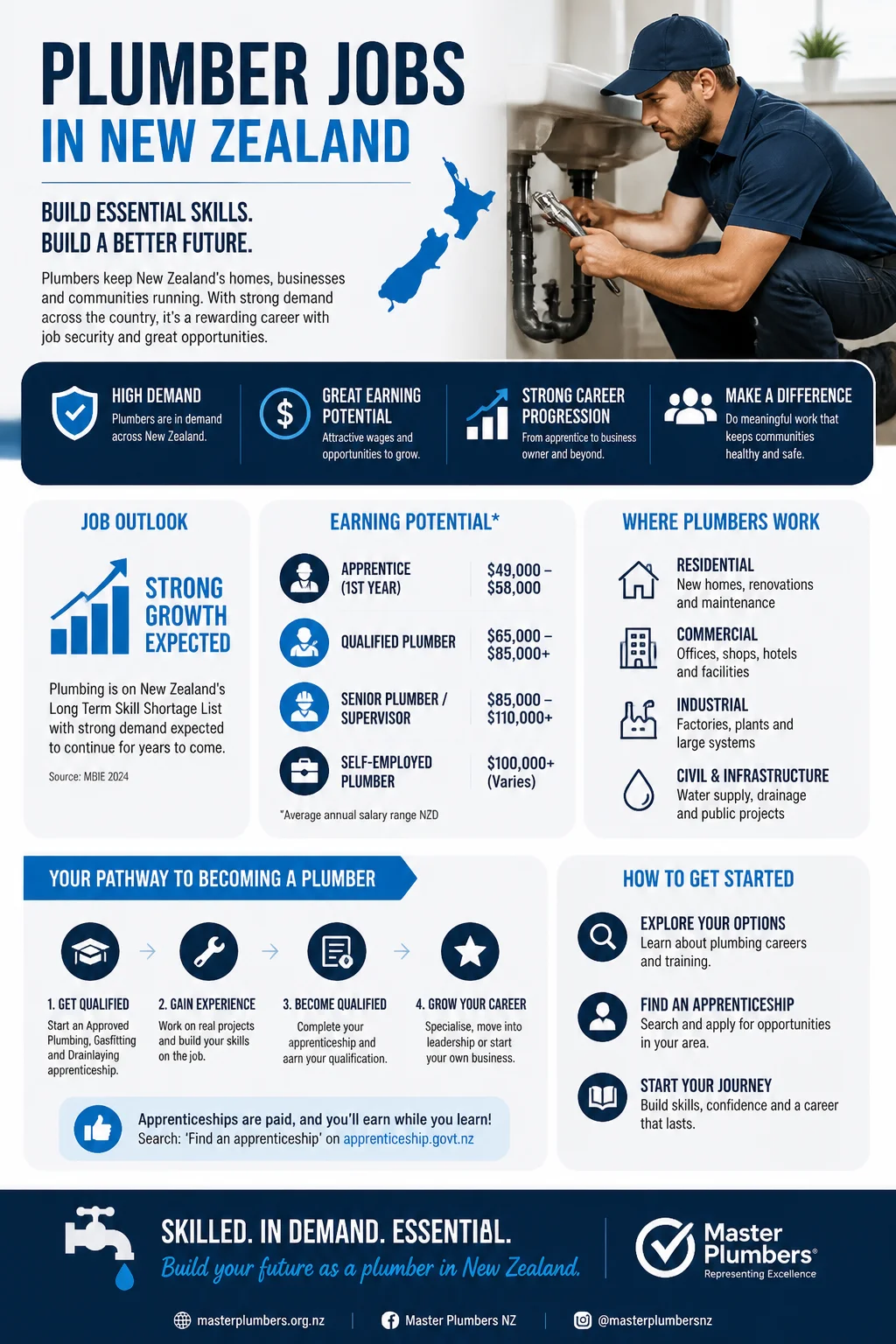
Qualified plumbers often pull $35 to $45 an hour depending on experience and location. Apprentices start lower, around $20-$25 while learning. Overtime and call-outs can push the weekly take-home higher fast.
Look, regional pay varies. Auckland and Wellington tend to sit at the top end because of living costs. Down south or in smaller towns the base rate might dip a bit but rent is cheaper so it balances out sometimes.
Not gonna lie, self-employed plumbers who run their own vans often clear more once they're established. But that brings its own headaches like chasing payments and keeping the books straight.
Getting qualified
Most routes start with an apprenticeship. You sign up, work under a licensed plumber, and study part-time for the National Certificate. Takes three to four years usually.
Some people come in through pre-trade courses at polytech first. Others switch careers later and do recognition of prior learning. Either way works as long as you stick with it.
But here's the catch. You need to pass the practical assessments and get signed off. Can't fake that part.
Where the work is right now
Residential stuff stays constant. People always need leaks fixed or new bathrooms put in. Commercial jobs like schools or hospitals pop up in cycles though.
I've noticed more demand for gasfitting skills lately too. Adding that ticket opens extra doors.
So if you're thinking about moving for work, check the current listings on Seek or Trade Me Jobs. They update daily and you can filter by region easy.
Pros and the not-so-great bits
Freedom to work outside. Variety in every job. Decent money once qualified. Those are the upsides people mention most.
Downsides? Weather. Some customers. The occasional 2am emergency call. And keeping up with changing regs on water efficiency and all that.
Real talk, if you hate being told what to do by clients some days, this trade might test your patience.
- Strong demand in growing areas
- Clear path from apprentice to qualified
- Options to go self-employed later
- Physical work that keeps you moving
Pick your region based on lifestyle more than anything. The jobs exist pretty much everywhere once you have the quals.