


Restaurant Jobs in the United States: Opportunities and Insights
The restaurant industry in the United States is a dynamic and ever-growing sector, offering a wide range of job opportunities for individuals at all skill levels. From fast-food chains to fine dining establishments, restaurant jobs are a vital part of the economy, providing millions of Americans with employment. In this article, we explore the types of restaurant jobs available, the skills required, and tips for landing a position in this bustling industry.
Types of Restaurant Jobs in the U.S.
The restaurant industry encompasses a variety of roles, catering to different interests and career goals. Whether you're looking for an entry-level position or a long-term career, there's something for everyone. Below are some of the most common restaurant job categories:
- Front-of-House Roles: These positions involve direct interaction with customers and include servers, hosts/hostesses, bartenders, and cashiers. Servers, for instance, take orders, serve food, and ensure customer satisfaction, often earning tips in addition to their hourly wage.
- Back-of-House Roles: These are behind-the-scenes positions such as chefs, cooks, dishwashers, and prep cooks. Chefs and cooks are responsible for preparing meals, while dishwashers maintain kitchen cleanliness.
- Management Roles: Restaurant managers oversee daily operations, manage staff, and ensure the establishment runs smoothly. This role often requires experience and strong leadership skills.
- Specialty Roles: Some restaurants hire for niche positions like sommeliers (wine experts), pastry chefs, or event coordinators, especially in upscale or specialized venues.
Why Choose a Career in the Restaurant Industry?
Restaurant jobs offer numerous benefits, making them an attractive option for many job seekers. For starters, the industry often provides flexible schedules, which is ideal for students, parents, or those with other commitments. Additionally, many positions require little to no formal education, allowing individuals to enter the workforce quickly.
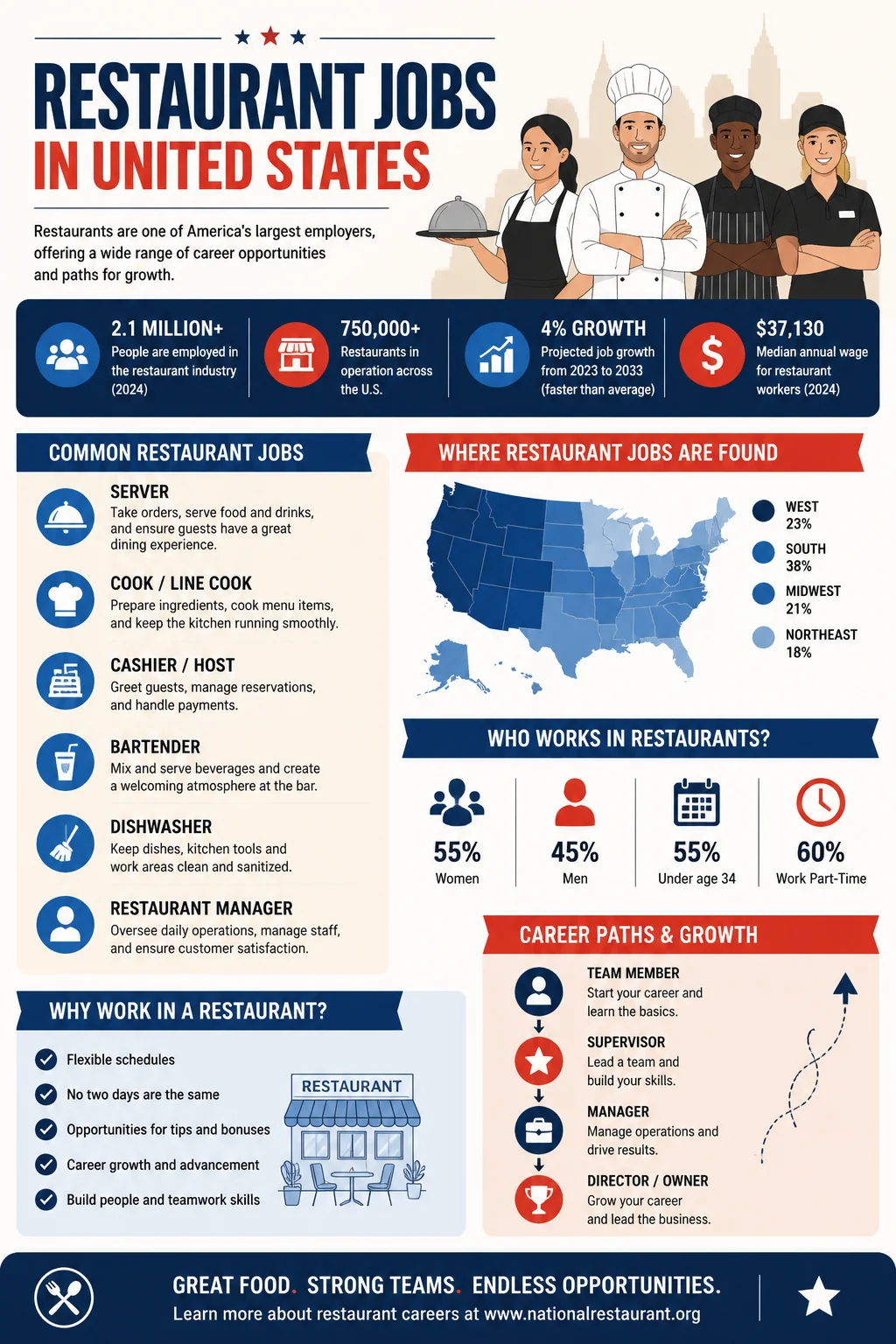
Another advantage is the potential for career growth. Many successful chefs and restaurant owners started in entry-level roles and worked their way up through dedication and skill development. Furthermore, the social aspect of restaurant work fosters teamwork and communication skills, which are valuable in any career.
Skills and Qualifications Needed for Restaurant Jobs
While specific requirements vary by role, certain skills are universally beneficial in the restaurant industry. For front-of-house positions, excellent customer service and communication skills are essential. Servers and bartenders must be friendly, patient, and able to handle high-pressure situations during busy shifts.
For back-of-house roles, attention to detail, time management, and a passion for food preparation are critical. Chefs and cooks often need culinary training or experience, though many start as apprentices or learn on the job. Physical stamina is also important, as restaurant work often involves long hours on your feet.
Management roles typically require prior experience in the industry, along with leadership and problem-solving abilities. Some managers may also need knowledge of budgeting and inventory management to ensure the restaurant operates profitably.
How to Find Restaurant Jobs in the United States
Finding a restaurant job in the U.S. is easier than ever, thanks to online job boards and networking opportunities. Websites like Indeed, Monster, and specialized platforms like Culinary Agents list thousands of restaurant openings across the country. Additionally, visiting local restaurants in person and inquiring about openings can be effective, especially for smaller establishments.
Networking is another powerful tool. Attending job fairs, industry events, or connecting with professionals on platforms like LinkedIn can open doors to unadvertised positions. Don’t forget to tailor your resume to highlight relevant experience and skills, even if they’re from unrelated fields.
Challenges in the Restaurant Industry
While restaurant jobs offer many benefits, they also come with challenges. Long hours, especially during weekends and holidays, are common. The fast-paced environment can be stressful, particularly during peak times. Additionally, wages for entry-level positions may be lower than in other industries, though tips can significantly boost income for tipped roles like servers and bartenders.
Despite these challenges, many find the work rewarding due to the camaraderie among staff and the satisfaction of providing excellent service to customers.
Future Outlook for Restaurant Jobs
The restaurant industry in the United States continues to grow, driven by consumer demand for diverse dining experiences. According to the National Restaurant Association, the industry employs over 15 million people and is projected to add more jobs in the coming years. Emerging trends like food delivery services and sustainable dining are also creating new opportunities for workers.
For those willing to adapt and learn, a career in the restaurant industry can be both fulfilling and financially rewarding. Whether you’re starting as a dishwasher or aiming to become a head chef, the possibilities are endless.