
Welder Jobs in South Africa: Opportunities and Insights
Welding is a critical skill in various industries, from construction and manufacturing to mining and infrastructure development. In South Africa, welder jobs are in high demand due to the country’s ongoing industrial growth and infrastructure projects. This article explores the landscape of welder jobs in South Africa, including opportunities, requirements, salary expectations, and tips for landing a welding position.
Why Welder Jobs Are in Demand in South Africa
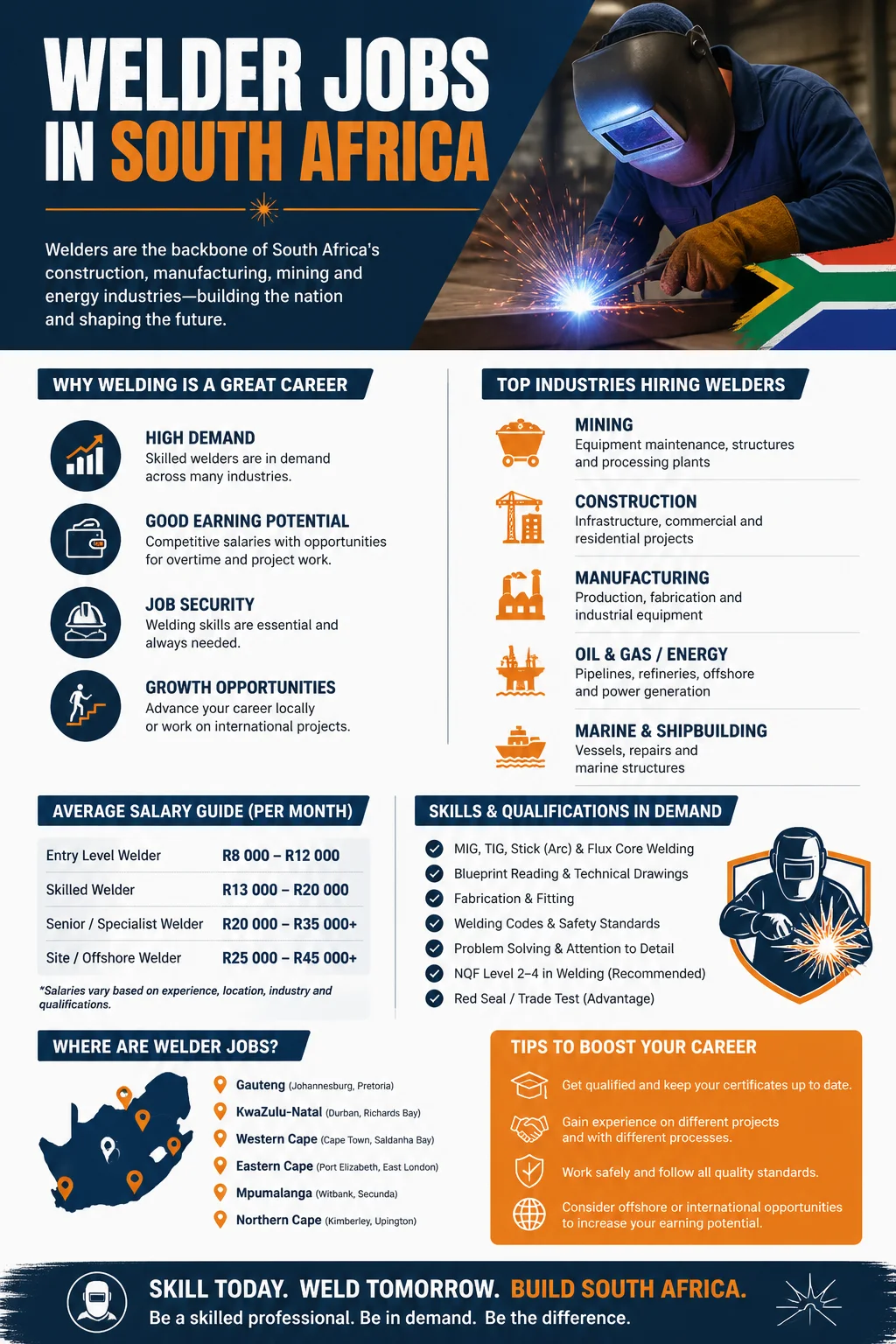
South Africa’s economy relies heavily on industries such as mining, construction, and manufacturing, all of which require skilled welders. With major infrastructure projects like road expansions, renewable energy initiatives, and urban development on the rise, the need for qualified welders continues to grow. Additionally, the country’s focus on local skills development has opened up opportunities for both experienced welders and those looking to enter the trade.
Welders play a vital role in building and maintaining structures, machinery, and equipment. Whether it’s joining metal components for a new bridge or repairing heavy machinery in a mine, their expertise ensures safety and efficiency across sectors.
Types of Welder Jobs Available in South Africa
There are various types of welding jobs in South Africa, catering to different skill levels and specializations. Some of the most common roles include:
- Arc Welder: Uses electric arcs to fuse metals, commonly employed in construction and manufacturing.
- MIG/TIG Welder: Specializes in Metal Inert Gas (MIG) or Tungsten Inert Gas (TIG) welding, often for precision work in industries like automotive or aerospace.
- Underwater Welder: A highly specialized role involving welding in underwater environments, often for offshore oil and gas projects.
- Boilermaker: Combines welding with fabrication skills to create and repair large metal structures like boilers and tanks.
- Structural Welder: Focuses on welding steel frameworks for buildings, bridges, and other infrastructure projects.
Qualifications and Skills Needed for Welder Jobs
While some entry-level welding positions may not require formal qualifications, most employers in South Africa prefer candidates with relevant training and certifications. Here are the key requirements:
- Education: A Grade 10 or 12 certificate is often the minimum requirement. However, completing a welding course at a Technical and Vocational Education and Training (TVET) college is highly beneficial.
- Certification: Certifications from recognized bodies like the Southern African Institute of Welding (SAIW) can boost employability.
- Experience: Hands-on experience through apprenticeships or on-the-job training is crucial for career advancement.
- Skills: Attention to detail, physical stamina, manual dexterity, and knowledge of safety protocols are essential for welders.
Salary Expectations for Welders in South Africa
The salary for welder jobs in South Africa varies based on experience, location, and specialization. On average, entry-level welders can earn between R8,000 and R12,000 per month. With a few years of experience, salaries can rise to R15,000–R25,000 per month. Highly specialized roles, such as underwater welding, can command even higher pay, often exceeding R30,000 monthly.
Factors like working in remote mining areas or taking on contract work for large projects can also lead to higher earnings due to overtime and hazard pay.
Where to Find Welder Jobs in South Africa
There are several platforms and resources to help job seekers find welding opportunities in South Africa:
- Online Job Portals: Websites like Indeed, CareerJunction, and PNet regularly list welding vacancies across the country.
- Recruitment Agencies: Specialized agencies focusing on industrial and technical roles can connect welders with employers.
- Networking: Joining industry groups or attending trade fairs can help build connections with potential employers.
- Apprenticeships: Many companies offer apprenticeship programs for aspiring welders, providing training and a pathway to full-time employment.
Tips for Landing a Welder Job in South Africa
Competition for welder jobs can be tough, so standing out as a candidate is essential. Here are some practical tips:
- Update your CV with relevant skills, certifications, and experience.
- Consider upskilling by learning advanced welding techniques or gaining additional certifications.
- Be flexible with location, as many high-paying welding jobs are in remote areas like mining towns.
- Showcase a strong commitment to safety, as employers prioritize candidates who follow strict safety guidelines.
Challenges and Future Outlook for Welders in South Africa
While welder jobs offer promising opportunities, there are challenges to consider. The physical demands of the job, exposure to hazardous environments, and the need for continuous skill development can be daunting. However, with South Africa’s focus on industrial growth and infrastructure, the future for welders looks bright. Emerging technologies like automated welding also mean that welders who adapt to new tools and methods will remain in demand.
In conclusion, welder jobs in South Africa provide a rewarding career path for those with the right skills and determination. Whether you’re just starting out or looking to advance, the welding industry offers diverse opportunities to grow and contribute to the nation’s development.