


Plumber Jobs in South Africa: Opportunities and Career Guide
South Africa’s growing infrastructure and urban development have created a steady demand for skilled tradespeople, with plumber jobs being among the most sought-after roles. Whether you're an experienced professional or someone looking to start a career in plumbing, the opportunities in this field are vast. This guide explores the landscape of plumber jobs in South Africa, including qualifications, job prospects, salary expectations, and how to find the right opportunities.
Why Plumber Jobs Are in Demand in South Africa
The need for plumbers in South Africa stems from several factors, including rapid urbanization, housing developments, and ongoing maintenance of water and sanitation systems. As cities like Johannesburg, Cape Town, and Durban expand, so does the need for skilled plumbers to install and repair plumbing systems in residential, commercial, and industrial settings.
Additionally, South Africa faces challenges with water scarcity and aging infrastructure, which further increases the demand for professionals who can ensure efficient water management and repair leaks or damages. Plumbers play a critical role in maintaining public health by ensuring clean water supply and proper sanitation, making this a recession-proof career choice.
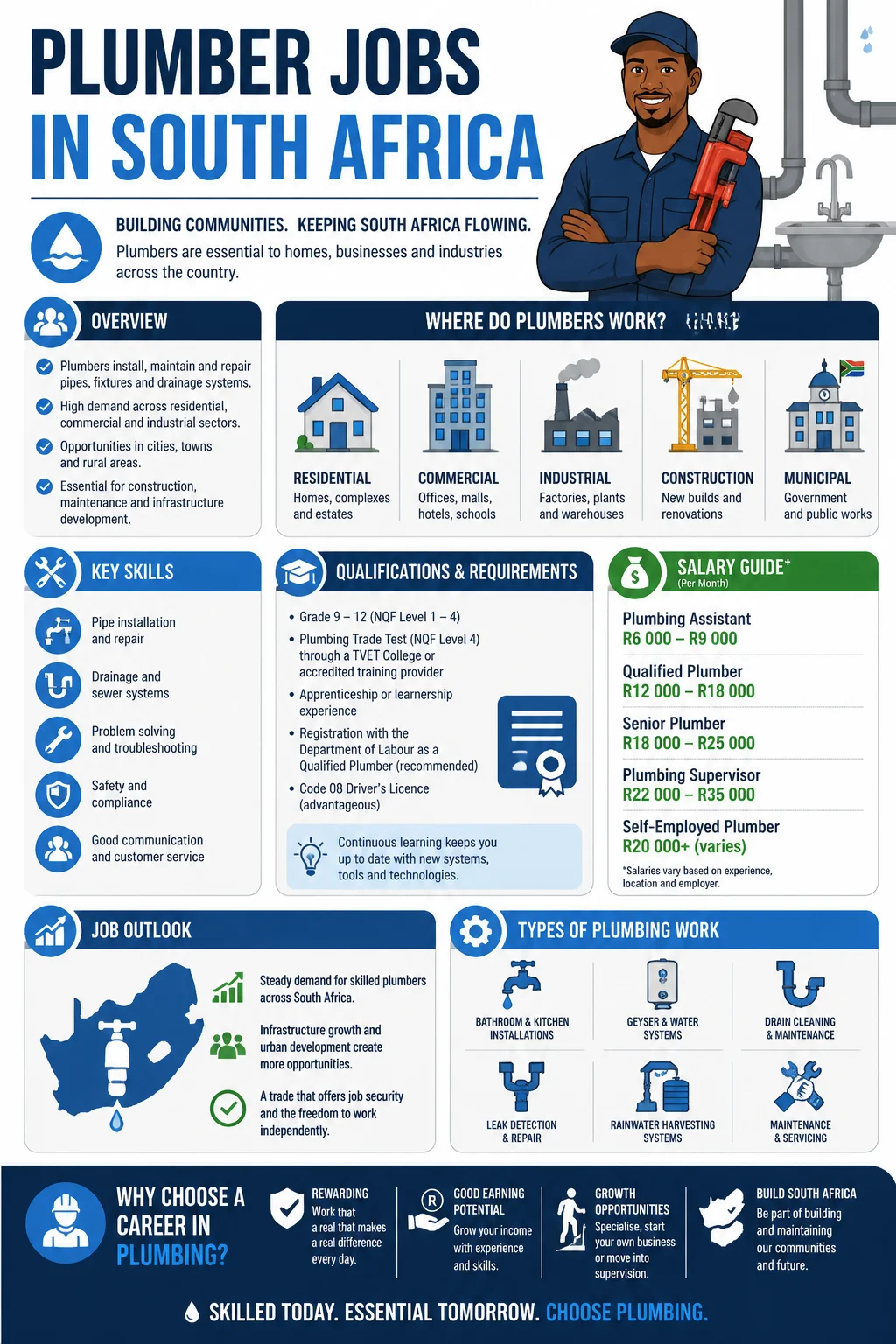
Qualifications and Skills Needed for Plumber Jobs
Becoming a plumber in South Africa requires a combination of formal education, practical training, and certification. Here are the key steps to qualify for plumber jobs:
- Formal Education: A minimum of a Grade 9 certificate is often required to start training, though a matric certificate is preferred by many employers and training institutions.
- Apprenticeship: Aspiring plumbers typically undergo a 3-4 year apprenticeship under a qualified plumber to gain hands-on experience.
- Trade Test: After completing an apprenticeship, candidates must pass a trade test to become a licensed artisan, as recognized by the Department of Labour.
- Certification: Registration with the Plumbing Industry Registration Board (PIRB) is essential to work legally as a plumber in South Africa.
Beyond formal qualifications, plumbers need physical stamina, problem-solving skills, and attention to detail. Familiarity with local building codes and safety regulations is also crucial.
Types of Plumber Jobs in South Africa
Plumber jobs in South Africa vary based on specialization and industry. Some common roles include:
- Residential Plumbers: Focus on installing and repairing plumbing systems in homes, including pipes, fixtures, and water heaters.
- Commercial Plumbers: Work on larger projects like office buildings, malls, and hospitals, often dealing with complex systems.
- Industrial Plumbers: Handle plumbing systems in factories and plants, often working with high-pressure systems and specialized equipment.
- Maintenance Plumbers: Employed by municipalities or private companies to maintain public water and sewage systems.
Salary Expectations for Plumbers in South Africa
The salary for plumber jobs in South Africa varies based on experience, location, and specialization. On average, entry-level plumbers earn between R8,000 and R12,000 per month, while experienced plumbers with certifications can earn between R15,000 and R25,000 monthly. Self-employed plumbers or those running their own businesses often earn more, depending on the volume of contracts and client base.
Plumbers in urban areas like Gauteng and the Western Cape typically earn higher wages due to the cost of living and demand for services. Additionally, overtime and emergency call-outs can significantly boost income.
How to Find Plumber Jobs in South Africa
Finding plumber jobs in South Africa is easier than ever, thanks to online job portals and networking opportunities. Here are some effective ways to start your search:
- Online Job Portals: Websites like Indeed, CareerJunction, and PNet regularly list plumber vacancies across South Africa.
- Trade Unions and Associations: Joining organizations like the PIRB can provide access to job boards and networking events.
- Local Classifieds: Check community boards or local newspapers for small businesses or individuals seeking plumbing services.
- Apprenticeship Programs: Many companies offer paid apprenticeships, which can lead to full-time employment upon completion.
Networking with other tradespeople and building a strong online presence through platforms like LinkedIn can also help you stand out to potential employers or clients.
Challenges and Rewards of a Plumbing Career
While plumber jobs offer stability and good earning potential, the career comes with challenges. Plumbers often work in physically demanding conditions, including tight spaces or extreme weather. Emergency call-outs may require working odd hours, and the job can be stressful when dealing with urgent repairs.
However, the rewards are significant. Plumbers enjoy job security, the satisfaction of solving critical problems, and the potential for entrepreneurship by starting their own plumbing businesses. With South Africa’s ongoing development, the future looks bright for those in this trade.
Conclusion
Plumber jobs in South Africa offer a promising career path for individuals with the right skills and determination. Whether you’re just starting out or looking to advance in the field, there are ample opportunities to grow. By obtaining the necessary qualifications, gaining hands-on experience, and staying updated on industry trends, you can build a successful career in plumbing. Start exploring job openings today and take the first step toward a rewarding profession in South Africa’s thriving trade sector.