

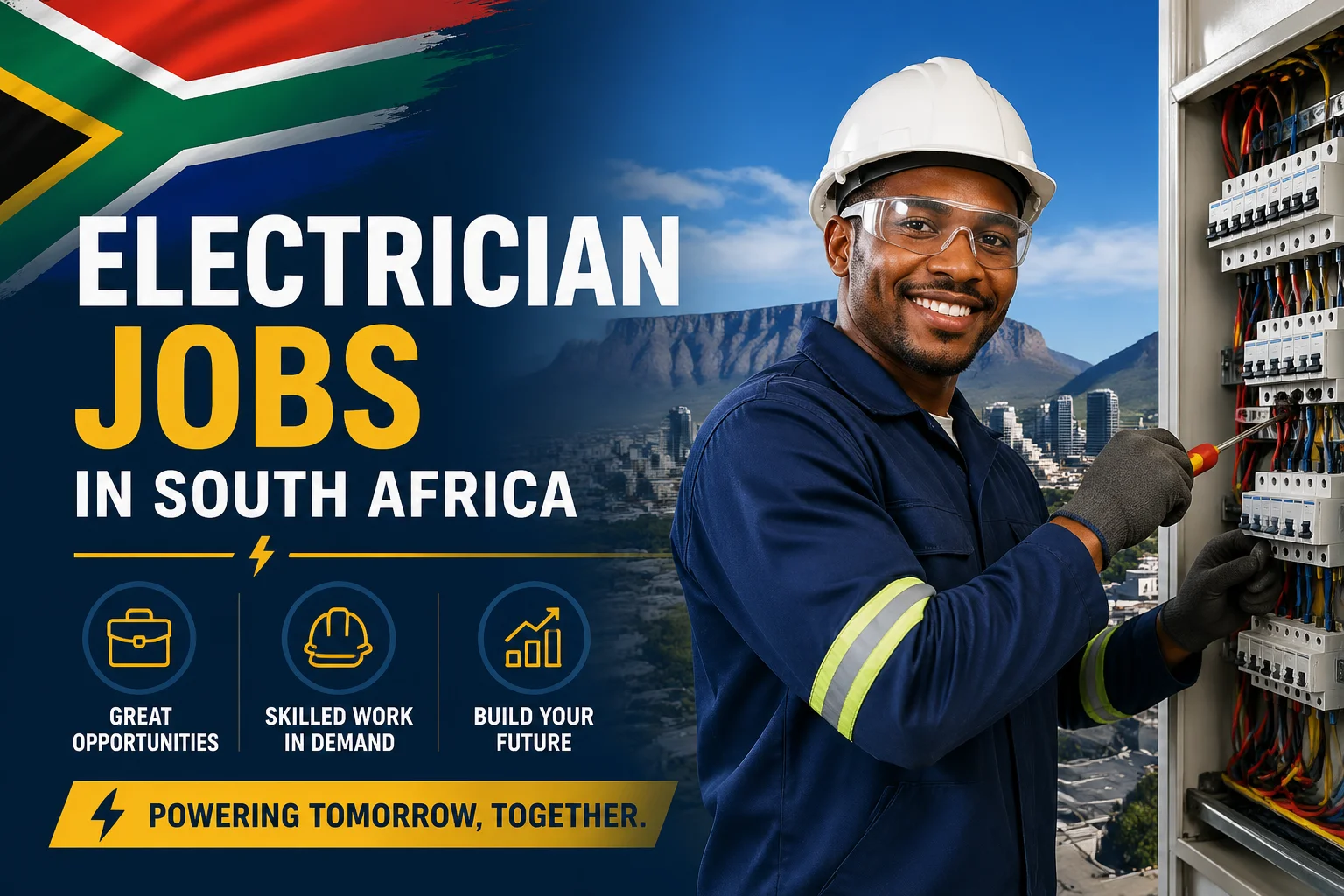
Electrician Jobs in South Africa: Opportunities and Insights
The demand for skilled electricians in South Africa continues to grow as the country invests in infrastructure development, renewable energy projects, and industrial expansion. Electrician jobs offer stable career paths with competitive salaries, making this trade a sought-after profession for many South Africans. In this article, we explore the landscape of electrician jobs in South Africa, including qualifications, job opportunities, salary expectations, and tips for entering the field.
What Do Electricians Do?
Electricians are responsible for installing, maintaining, and repairing electrical systems in residential, commercial, and industrial settings. Their tasks include wiring buildings, troubleshooting electrical issues, ensuring safety compliance, and working on specialized projects like solar panel installations. In South Africa, electricians play a critical role in supporting the nation’s energy needs, especially with the push toward sustainable energy solutions.
Qualifications Needed for Electrician Jobs in South Africa
To become an electrician in South Africa, you typically need a combination of formal education, practical training, and certification. Here are the key steps to qualify for electrician jobs:
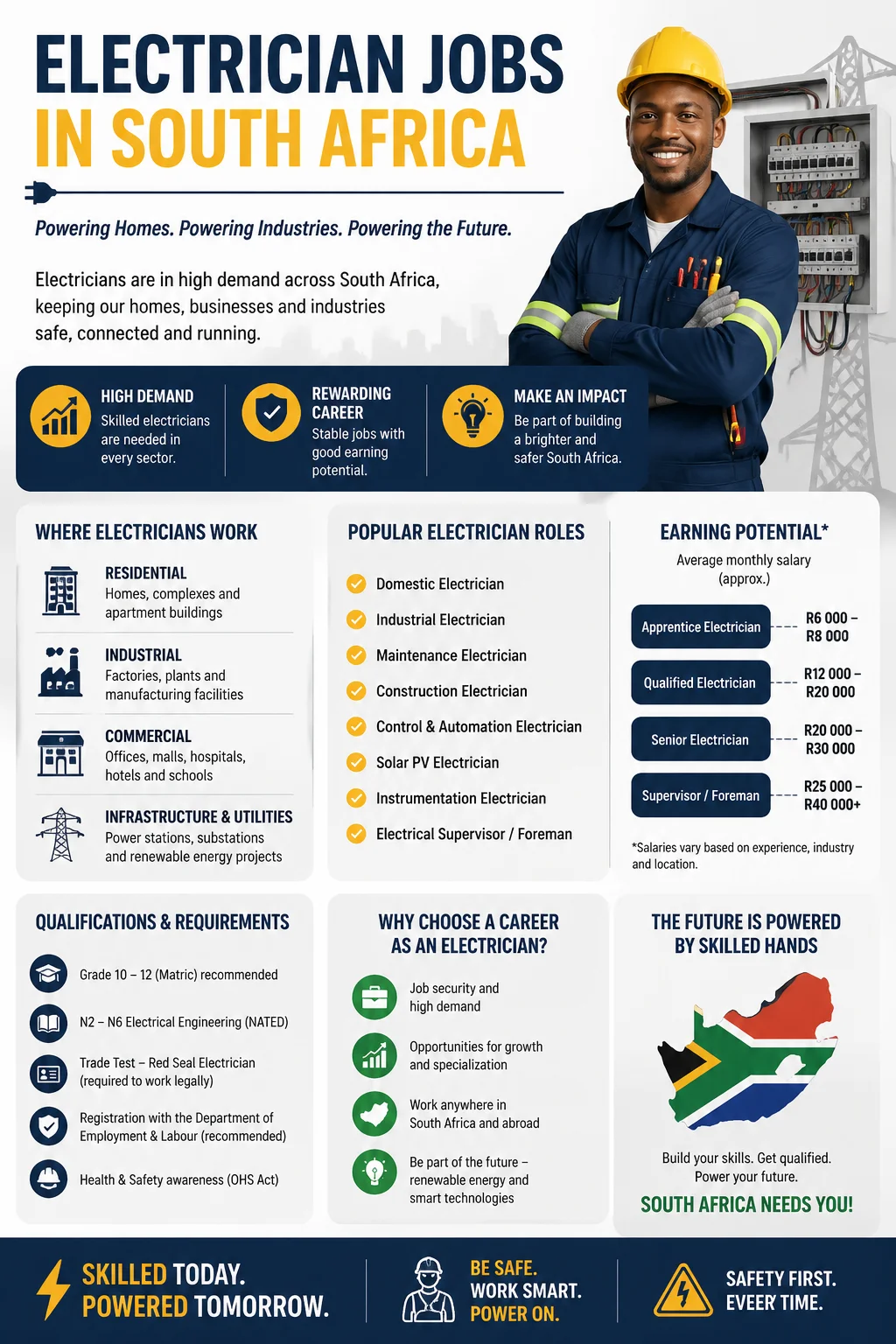
- Basic Education: A Grade 9 certificate is often the minimum requirement, though many employers prefer candidates with a Grade 12 certificate, including Mathematics and Physical Science.
- Vocational Training: Enroll in a Technical Vocational Education and Training (TVET) college to complete an N1-N3 Electrical Engineering course.
- Apprenticeship: Gain hands-on experience through a 3-4 year apprenticeship under a qualified electrician to develop practical skills.
- Trade Test: Pass the Trade Test at a recognized institution to become a certified artisan.
- Wireman’s License: For certain roles, especially in installations, obtaining a Wireman’s License is essential to work independently.
Types of Electrician Jobs in South Africa
The field of electrical work offers diverse opportunities across various sectors. Some common types of electrician jobs include:
- Residential Electricians: Focus on wiring and repairs in homes and small buildings.
- Commercial Electricians: Work on electrical systems in offices, retail spaces, and public buildings.
- Industrial Electricians: Handle complex systems in factories, mines, and manufacturing plants.
- Renewable Energy Electricians: Specialize in solar and wind energy installations, a growing field in South Africa.
- Auto Electricians: Focus on electrical systems in vehicles, including cars and heavy machinery.
Where to Find Electrician Jobs in South Africa
Job opportunities for electricians are abundant in South Africa, especially in urban centers like Johannesburg, Cape Town, and Durban. Key industries hiring electricians include construction, mining, manufacturing, and energy. Here are some ways to find electrician jobs:
- Online Job Portals: Websites like Indeed, CareerJunction, and PNet regularly list electrician vacancies.
- Recruitment Agencies: Specialized agencies can connect you with employers in need of skilled tradespeople.
- Networking: Joining industry associations or attending trade fairs can help you build connections and learn about openings.
- Apprenticeship Programs: Many companies, including Eskom and large construction firms, offer apprenticeship programs that often lead to full-time roles.
Salary Expectations for Electricians in South Africa
Salaries for electricians in South Africa vary based on experience, location, and specialization. On average, entry-level electricians earn between R10,000 and R15,000 per month, while experienced electricians with certifications can earn R20,000 to R30,000 monthly. Those in high-demand sectors like renewable energy or mining may command even higher wages. Additionally, self-employed electricians often have the potential to earn more by taking on multiple projects.
Challenges and Opportunities in the Field
While electrician jobs offer rewarding careers, there are challenges to consider, such as working in hazardous conditions and the physical demands of the job. However, the opportunities outweigh the challenges, especially with South Africa’s focus on renewable energy and infrastructure projects like the Renewable Energy Independent Power Producer Procurement Programme (REIPPPP). Skilled electricians are well-positioned to benefit from these initiatives.
Tips for Starting a Career as an Electrician
If you’re considering a career as an electrician in South Africa, here are some actionable tips:
- Invest in Education: Start with the right qualifications through a TVET college or similar institution.
- Gain Experience: Seek apprenticeships or entry-level roles to build practical skills.
- Stay Updated: Keep up with industry trends, especially in renewable energy and smart technology.
- Obtain Certifications: A Wireman’s License or other credentials can boost your employability.
- Build a Network: Connect with other professionals in the trade to learn about job openings and opportunities.
Conclusion
Electrician jobs in South Africa present a promising career path for individuals with the right skills and determination. With the country’s ongoing development and shift toward sustainable energy, the demand for qualified electricians is set to rise. Whether you’re just starting out or looking to advance in the field, now is an excellent time to explore electrician opportunities in South Africa. Start by gaining the necessary qualifications, building experience, and connecting with industry professionals to secure a rewarding role in this essential trade.