

What packing jobs in Nepal actually involve
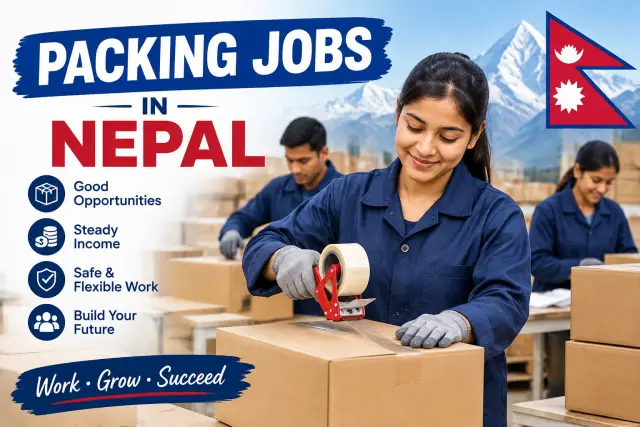
A packing job can mean folding clothes into bags in Kathmandu, sealing food packets near Birgunj, or preparing online orders for delivery. The exact work depends on the employer, but the basic goal’s the same: get products ready to move without damaging them or mixing up orders.
Some roles are called packing helper, packer, packaging assistant, warehouse helper, or dispatch assistant. So if you’re searching for packing jobs in Nepal, don’t stick to just one job title.
The work can be straightforward to learn. It can also be tiring. You might stand for hours, repeat the same movement, or work faster when a big order comes in. Before saying yes, ask what a normal shift looks like and whether you’ll need to lift heavy boxes.
Where can you find packing work?
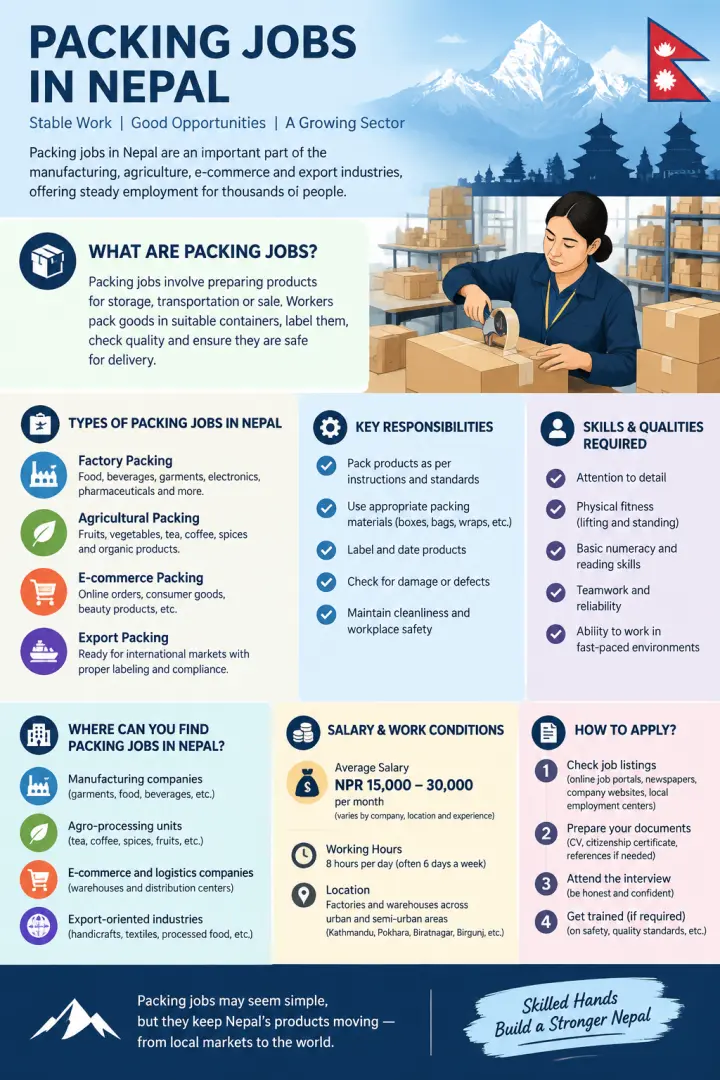
Businesses that make, store, or sell physical products often need packers. Kathmandu Valley has warehouses, garment businesses, food companies, and e-commerce sellers that may hire for these roles. You can also look around industrial and trading areas such as Birgunj, Biratnagar, Hetauda, Butwal, and Pokhara.
Vacancies change, though. A company that hired last month might not be hiring today, so check the date on any listing before you spend time applying.
Food and beverage packing
Food packing jobs may involve filling packets, sealing them, checking expiry dates, and putting finished products into cartons. Depending on the workplace, you could handle tea, spices, snacks, noodles, or other packaged food.
Cleanliness matters here. Employers might ask you to wear gloves, a hair cover, or other protective gear. Some places provide training, but don’t assume that means the job’s easy — production lines can move quickly.
Garments and textiles
Clothing businesses may need people to fold garments, check sizes, attach tags, and pack orders. You could work with finished clothes, fabric, or accessories.
Attention to detail helps. A shirt packed in the wrong size can mean an unhappy customer and extra work for the whole team. And yes, neat folding really can be part of the job.
Warehouses and online orders
For warehouse packing jobs in Nepal, you may pick items from shelves, check an order list, wrap products, and prepare parcels for dispatch. Some employers use barcode scanners or simple inventory software. Others still rely on printed lists.
Ask about lifting before you accept. A parcel of phone cases and a carton of bottled drinks are very different things.
Other places to check
Pharmaceutical companies, printing businesses, and makers of household goods may also have packing roles. Requirements can be stricter when products need special handling or hygiene controls, so read the vacancy carefully. A packing assistant at one company might do a completely different job from someone with the same title elsewhere.
Do you need experience to get hired?
Not always. Some entry-level packing jobs in Nepal accept applicants without previous experience and teach the work on the job. Others prefer people who’ve worked in a factory, warehouse, shop, or production line.
Many employers care about practical habits more than a fancy CV. Can you follow instructions, arrive on time, and notice when a label doesn’t match the product? That sort of thing counts.
Depending on the role, useful skills include:
- Counting items and checking quantities accurately.
- Reading basic labels, order slips, and expiry dates.
- Keeping a work area clean and following safety rules.
- Working with a team when orders get busy.
- Using a scanner or basic computer system, if the employer provides one.
- Handling repetitive work without rushing past mistakes.
Some vacancies ask for a particular education level or language ability. Check the listing instead of assuming every employer wants the same thing. If you’re not sure you meet one requirement, you can still ask the employer before ruling yourself out.
Salary, shifts, and the questions to ask
Packing job salaries in Nepal vary by employer, location, experience, and working hours. A full-time factory role may be paid monthly, while temporary work could be paid daily or by shift. Some listings mention accommodation or meals; others don’t.
Look closely at what’s actually included. A salary figure sounds different once you know whether it’s basic pay, total pay with allowances, or a number based on overtime that isn’t guaranteed.
Before accepting an offer, ask:
- How much is the basic pay, and when will it be paid?
- How long is a normal shift? Are there night shifts or rotating schedules?
- How is overtime approved and paid?
- Is there a weekly day off, and what leave is available?
- Will the employer provide a written contract or appointment letter?
- Are meals, transport, protective equipment, or accommodation provided? If so, are there deductions?
Keep a copy of the offer and any contract you sign. Nepal has rules covering wages, working hours, leave, and other employment conditions, but the details can depend on the job and current law. Check the latest information with Nepal’s Department of Labour and Occupational Safety if something doesn’t seem right.
And don’t be shy about asking how deductions work. “Free accommodation” isn’t much use if there’s an unexpected charge taken from your wages later.
How to search for packing jobs in Nepal
Start with established job sites such as Merojob, JobsNepal, and LinkedIn. Try searches like “packing jobs in Kathmandu,” “warehouse helper Nepal,” “packaging assistant,” or “food packing job.” Changing the title can turn up openings you’d otherwise miss.
Local businesses are another option. If there’s an industrial area or warehouse near you, ask whether the company accepts applications directly. Bring a simple CV and make sure you’re speaking with someone who actually works there.
Facebook groups and word of mouth can help too. But a post with a phone number and a promise of easy money isn’t the same as a verified vacancy. Check the employer’s name, address, job duties, and contact details before sharing documents or travelling for an interview.
What to put on your CV
Keep it simple. Include your name, phone number, location, education, and any work experience that relates to packing, stock handling, cleaning, retail, or factory work. If you’ve never had a formal job, mention practical experience honestly — helping in a family shop, for example, if that’s something you’ve done.
Don’t claim you know how to use a machine or scanner when you don’t. A short, honest CV is better than a long one you can’t explain at the interview.
You can also add the languages you speak and your availability for shifts. If a listing asks for documents, send copies only through a channel you trust, and ask why they’re needed.
What about packing jobs from home?
Home-based packing jobs in Nepal sound appealing, especially if travelling to a workplace isn’t practical. Some small businesses may arrange genuine piecework, but these offers deserve extra care. There’s often no easy way to judge a listing from a social media post alone.
Be wary if someone promises unusually high pay for simple packing, asks you to buy a starter kit, or demands a registration deposit before you’ve seen a contract. Another warning sign? They won’t give you a verifiable business address or explain how completed work will be checked and paid.
Ask who supplies the materials, who pays for delivery, what happens if an item is rejected, and when you’ll receive payment. Get the terms in writing. If the answers keep changing, walk away.
How to spot a fake packing job
Real employers should be able to explain the role and their hiring process. Scammers, on the other hand, may push you to act before you’ve had time to check anything.
- Be cautious about upfront fees for a job offer, training materials, or equipment.
- Verify the company through its official contact details rather than only the number in an advert.
- Don’t send bank passwords, one-time codes, or more personal information than the hiring process reasonably needs.
- Meet at a verifiable workplace or office when possible, and tell someone where you’re going.
- Read any agreement before signing, especially the pay, deductions, and working hours.
Pressure is a red flag. “Pay today or lose the job” is a good reason to slow down, not speed up.
For packing jobs abroad advertised in Nepal, check the agency and job details through Nepal’s Department of Foreign Employment. Overseas recruitment has its own rules, so don’t assume a local packing vacancy and a foreign employment offer are handled the same way. Never hand over your passport or pay a recruiter without checking the process and keeping proper receipts.
Getting ready for the interview
You probably won’t need a long speech. Be ready to say where you live, when you can start, whether you’ve done similar work, and which shifts you can manage. If you’ve handled stock in a shop or packed orders for a small business, give a specific example.
Ask to see the work area if that’s possible. Is it clean? Are workers given the right protective gear? A quick look can tell you more than a vague job description.
Wear clean, comfortable clothes and take copies of any documents the employer requested. For an unfamiliar location, check the route beforehand — arriving late because you went to the wrong industrial gate isn’t a great start.
Can a packing job lead to other work?
It can. Someone who starts as a packing helper may later learn stock counting, dispatch, machine operation, or quality checking. A larger employer might have team leader roles too, although promotion depends on the business and its openings.
If you want to move up, ask what skills the next role requires. Maybe it’s basic computer use, better recordkeeping, or training on a packing machine. You don’t have to figure it all out on day one.
Quick answers before you apply
Are packing jobs in Nepal open to freshers?
Some are. Look for listings that say training is provided or experience isn’t required. You’ll still need to meet the employer’s other conditions and be able to do the work safely.
Are there part-time packing jobs?
They do come up, particularly around busy sales periods or for temporary orders. Hours aren’t always predictable, so ask how many shifts are available and whether you’re being hired for a fixed period.
What should I do if an employer doesn’t pay?
Keep your contract, attendance records, messages, and any payslips or payment receipts. Ask the employer about the missing wages first if it’s safe to do so. If the issue isn’t resolved, contact the relevant labour office or Nepal’s Department of Labour and Occupational Safety for guidance on making a complaint.
Is packing work suitable for women and men?
Yes. The useful question is whether the specific job, shift, workplace, and physical demands suit you. Ask about transport and safety arrangements too, especially if the role includes late or early shifts.