
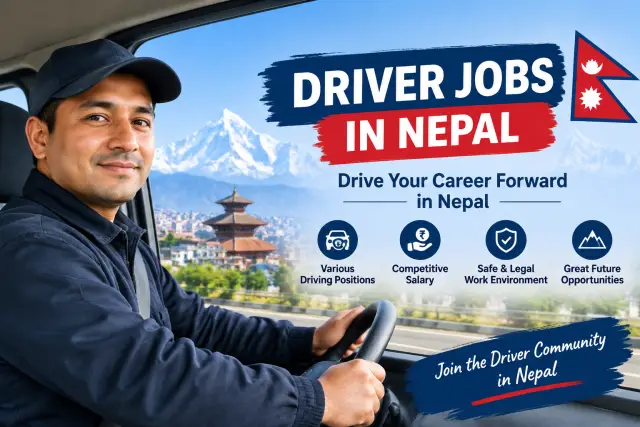
A valid driving licence is usually the first thing an employer checks when you're applying for a driver job in Nepal. But it's not the only thing that matters. Your experience with the right vehicle, knowledge of local roads, and ability to handle passengers or goods safely can make a real difference.
Whether you're looking for a private driver job in Kathmandu, a delivery role in Pokhara, or work driving a bus between cities, start by checking that your licence covers the vehicle you'll be driving. That's the detail you don't want to miss.
What kinds of driver jobs are available in Nepal?
Driver jobs aren't all the same. Some offer a regular daytime schedule, while others involve early starts, long trips, or waiting around until a customer calls. Here's what you might come across in a job search.
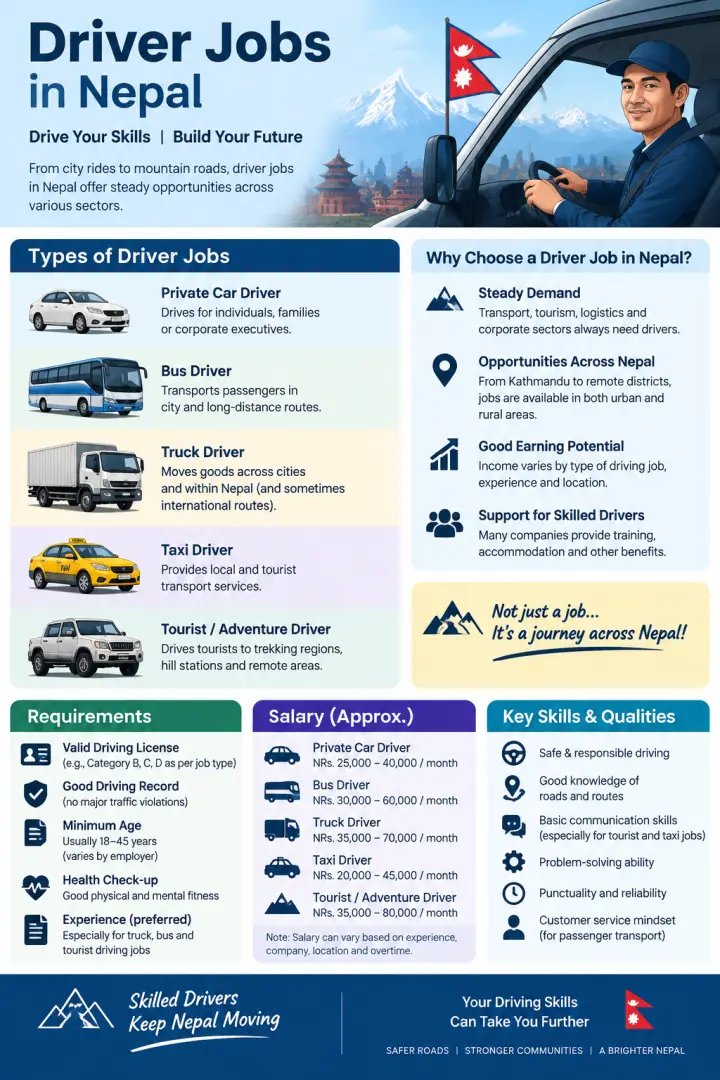
Private and family drivers
Private drivers usually work for an individual or family. The job might include school runs, office drop-offs, shopping trips, and keeping the car clean. Some employers also ask the driver to live on-site or stay available outside normal hours.
Ask about that before accepting. A job described as “full-time” can mean very different things to different families.
You'll often need a valid licence for a light vehicle, a clean driving record, and references from previous employers. Knowing routes around Kathmandu Valley can help if that's where the family lives.
Company and office drivers
Offices, hotels, schools, hospitals, and other businesses hire drivers to move staff, guests, documents, or supplies. Depending on the role, you could be driving a car, van, or another company vehicle.
These jobs may come with a more fixed routine than private driving, though that's not guaranteed. Some companies need drivers for airport pickups, late meetings, or trips outside the city. Look closely at the working hours and overtime terms.
Taxi and ride service drivers
Taxi work can suit people who know their city well and don't mind changing schedules. Some drivers own their vehicles, while others drive a vehicle provided by someone else. Ride service opportunities may also be available through apps, depending on local rules and the service operating in your area.
Before signing up or making a payment, check the current requirements for the vehicle, registration, insurance, and permits. And do the maths on fuel, maintenance, app charges, and any rental costs. A busy day on the road doesn't always mean a good take-home amount.
Delivery drivers and riders
Courier companies, restaurants, online shops, and local businesses need people to deliver food, parcels, and other goods. Some roles use motorcycles or scooters; others require a van or small truck.
Good route planning helps, especially when addresses are tricky or traffic's heavy. You'll also need the right licence for the vehicle. If the employer expects you to use your own bike, ask who pays for fuel, repairs, mobile data, and insurance.
Bus, truck, and heavy vehicle drivers
Bus and truck jobs can involve longer routes, larger vehicles, and more responsibility. A bus driver may carry passengers between towns, while a truck driver might transport construction materials, food, or other goods across districts.
These roles usually call for the appropriate heavy vehicle licence and relevant experience. Employers may also want someone familiar with hill roads and long-distance driving. Road conditions can change quickly during the monsoon, so safety and vehicle checks matter a lot.
Where should you look for driver vacancies?
Start with Nepali job websites, company career pages, and local recruitment notices. Search using terms that match the work you want, such as “driver jobs in Kathmandu,” “truck driver vacancy in Nepal,” or “delivery rider jobs in Pokhara.” Adding your preferred location can save you some scrolling.
There's no single place where every vacancy gets posted, though.
- Check job websites and filter by location, driving experience, and vehicle type.
- Visit the websites or social media pages of courier companies, hotels, schools, and transport businesses.
- Ask people you trust if they know of openings. A former employer or mechanic might hear about a vacancy before it's advertised.
- Look at local notice boards and newspaper job sections, especially for work outside major cities.
- Join local job groups, but check the employer's details before sharing documents or paying anything.
Keep an eye on application dates. A post shared in a Facebook group might be months old, even if someone commented on it yesterday.
Licence requirements: check the vehicle category
You'll need a valid Nepali driving licence for the type of vehicle the job requires. A motorcycle licence isn't a substitute for a car licence, and experience driving a car doesn't automatically qualify you to drive a bus or truck.
For current licence categories, eligibility rules, application steps, and renewals, check with the Department of Transport Management or the relevant provincial transport office. Rules and services can change, and details may differ depending on where you apply.
Employers can also have requirements beyond the licence itself. A school, for example, may ask for references or a background check. A long-distance transport company might want proof that you've driven similar vehicles before.
What if your licence has expired?
Check the renewal process with the appropriate transport office before you apply for jobs that require you to start driving right away. Don't assume an employer can overlook an expired licence. You can still prepare your CV and contact employers while sorting out the paperwork, but be honest about your status.
How much do driver jobs in Nepal pay?
Pay varies a lot. A private driver in Kathmandu, a local delivery rider, and a long-distance truck driver won't necessarily earn the same amount. Experience, location, vehicle type, hours, and the employer all affect the offer.
Some vacancies list a monthly salary. Others advertise a daily rate, a per-trip amount, or earnings based partly on deliveries. Be careful when comparing them: a figure that looks higher may not include fuel, vehicle upkeep, or time spent waiting between trips.
Ask for the full picture before saying yes:
- Is the amount a fixed salary or an estimate based on trips?
- How many hours and working days are expected?
- Is overtime paid, and how is it calculated?
- Who covers fuel, meals during trips, accommodation, and repairs?
- Are there paid leave, insurance, or other benefits?
- When will you be paid, and are there any deductions?
If the offer includes accommodation or meals, ask what that actually means. A room at the workplace sounds useful until you find out you're expected to be available at all hours.
Getting your application ready
You don't need a fancy CV to apply for most driver jobs. A clear one is better. Put your contact details near the top, then list your licence category, driving experience, previous employers, and the types of vehicles you've handled.
Be specific where you can. “Three years driving a passenger van around Kathmandu Valley” tells an employer more than “experienced driver.” Only include routes, vehicles, and responsibilities you've actually worked with.
You might also be asked for copies of these documents:
- Your driving licence and a form of identification.
- Passport-sized photographs, if requested.
- Experience letters or references from previous employers.
- Vehicle documents and insurance details if you're using your own vehicle.
Requirements differ, so follow the vacancy notice. Keep your original documents safe, and don't hand them over permanently to an employer or agent. Before sending copies online, check that you're dealing with a real company and ask why the documents are needed.
No professional driving experience yet?
Start with roles that match your licence and the experience you do have. A local delivery company or a business looking for a junior driver may be more open to someone starting out than an employer hiring for a long-distance bus route.
You can mention regular driving you've done, but don't pass it off as paid work. Employers may test your parking, road awareness, or basic vehicle checks anyway. And that's fair.
What employers may ask in an interview
Expect questions about the vehicles you've driven, the routes you know, and how you handle traffic or difficult passengers. You could also be asked what you'd do if a vehicle breaks down or if you're running late for a pickup.
A practical driving test is common. You might be asked to reverse into a space, drive through traffic, or show how you check tyres and lights before a trip. Bring your valid licence and any documents the employer has requested.
It's fine to ask questions of your own, too. Who maintains the vehicle? Will you be driving at night? What happens if a trip takes longer than planned? Get the answers before your first day, not after a misunderstanding on the roadside.
Watch out for misleading job offers
Not every vacancy shared online is genuine. Be cautious if someone promises a guaranteed job but asks for a large payment upfront, pressures you to transfer money quickly, or won't give you a company address and written job details.
Check the business independently. Call a number listed on its official website rather than relying only on the number in a message. If an agent is involved, ask what the fee is for and whether they're authorised to recruit for that job.
And don't share bank passwords, one-time codes, or unnecessary personal details with a recruiter. A real employer shouldn't need those to review your CV.
Considering a driving job abroad?
That's a different process from taking a driving job in Nepal. Check the employer, recruitment agency, contract, visa, destination-country licence requirements, and labour approval through the appropriate official channels before paying or travelling. Keep receipts and copies of anything you sign.
Before you accept the job
Get the main terms in writing where possible: salary, hours, weekly rest, leave, overtime, duties, and who pays for vehicle-related costs. Read the contract carefully, and ask for an explanation if something isn't clear. You can check current employment rules with Nepal's labour authorities if you're unsure about your rights.
One last practical thing — take a good look at the vehicle. Check the tyres, lights, brakes, documents, and any obvious damage before you start. If an employer expects you to drive a vehicle that feels unsafe, speak up. No delivery or pickup is worth taking that risk.