


Packing jobs in Malaysia don't get much attention. Nobody brags about them at family dinners. But walk into any industrial area in Shah Alam, Klang or Senai at 7am and you'll see hundreds of people heading in for exactly this kind of work.
So let's talk about what it really looks like.
What does a packing job actually involve?
Mostly it's repetitive, and that's the honest answer. You pick up items, check them, put them in boxes or bags, seal them, label them and stack them. Sometimes it's snacks, sometimes phone accessories, sometimes parcels for Shopee or Lazada sellers.
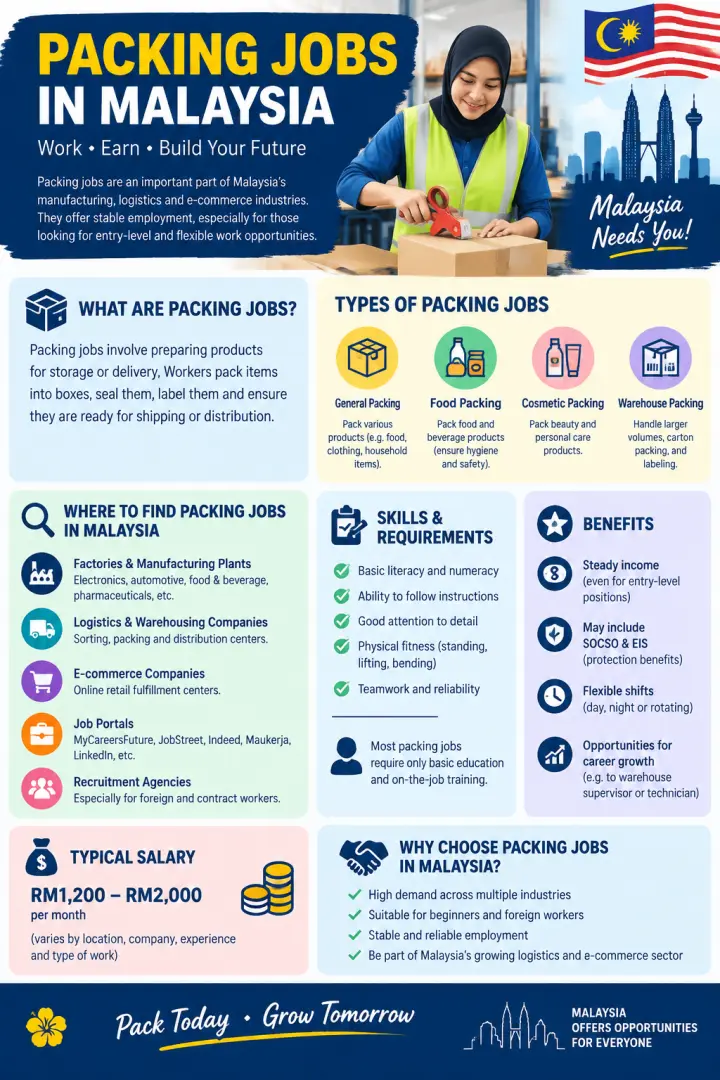
Some days you stand at a conveyor belt. Other days you're at a table doing hand packing, folding and bundling. A few places mix it up with light lifting, scanning barcodes or moving trolleys.
It's not rocket science. Speed and accuracy matter more than any degree.
The common types you'll run into
- Factory packing: electronics, plastics, furniture parts, rubber gloves. Big in Penang, Johor and Selangor.
- Food packing: bakeries, frozen food, sauces, kerepek, instant noodles. Usually has stricter hygiene rules.
- E-commerce and warehouse packing: pick, pack, label, send. Gets crazy busy during 11.11 and 12.12 sales.
- Courier hubs: sorting and packing parcels for companies like J&T, Ninja Van and Pos Laju. Often night shifts.
- Retail and small business packing: tiny shops or home-based brands that need a hand with orders. Pay can swing wildly here.
How much can you earn?
The minimum wage in Malaysia is RM1,700 a month now, and legit employers can't go below that. That's your floor.
Most general packing operators I've seen quoted land somewhere between RM1,700 and RM2,300 for the basic part. Then overtime kicks in. Honestly, overtime is where people make the real difference. Under the Employment Act it's 1.5 times your hourly rate on normal days, 2 times on rest days and 3 times on public holidays.
Do the math on that. A few OT shifts a week and your payslip looks a lot healthier. But you'll be tired. Real tired.
Some places add shift allowance (night shifts especially), attendance bonuses or meal allowances. Ask about these before you say yes. A job offering RM1,700 with a RM150 attendance bonus is not the same as one offering RM1,700 flat.
Where to look for openings
Don't just stick to one place. Try a mix.
- Jobstreet, Maukerja and Hiredly for the more formal listings
- MYFutureJobs (the government portal) which is free and underrated
- Facebook groups for your area, like 'kerja kosong Klang' or 'kerja kosong Johor'
- Walk-ins at factories. Seriously. Lots of factories in industrial parks hang a banner outside saying they're hiring
Walk-ins work better than people think, especially if you live close. Employers like workers who can actually get to work on time. A 10-minute commute beats a 90-minute one every day of the week.
Stuff to check before you sign
Here's the thing. Most packing employers are decent. But a few aren't, and it's easier to spot them before you start than after your first month.
Ask about the working hours
The normal limit is 45 hours a week. If someone tells you it's 12 hours a day, six days a week as the standard, that's a red flag. OT should be extra and paid as OT.
Ask what's covered
EPF, SOCSO and EIS should come off your payslip, and your employer pays their share too. If a company says they'll skip it so you take home more, walk away. It looks good for a month and then you're stuck without protection when something goes wrong.
Ask about transport and accommodation
A lot of factories run shuttle buses. Some provide hostels. Great, but find out what the deduction is. Sometimes it's RM50. Sometimes it's way more.
Food packing is a bit different
If you're going for food packing, expect extra rules. Hairnets, gloves, aprons, boots. Hand washing at set times. No jewellery, no phone on the line.
You'll likely need a food handler course and a typhoid jab, which are required for people handling food. Some employers arrange it, some want you to sort it out first. Check before you spend money.
And cold rooms. Not gonna lie, packing frozen stuff in a cold room for eight hours is no joke. Bring proper layers if they don't supply them.
The work-from-home packing scam
Okay, real talk. You've probably seen the posts. 'Packing job from home, RM3,000 a month, no experience, just pay a small deposit for materials.'
Don't.
Genuine employers don't ask you to pay to start working. Not for starter kits, not for registration, not for training. If someone asks for money up front, it's almost certainly a scam. Same goes for agents who charge huge fees for a factory job. Report it, block it, move on.
A decent rule of thumb: if the pay sounds way above what the factory next door is paying for the same work, ask yourself why.
For foreign workers
If you're coming from outside Malaysia, the legal route matters more than anything else. Your employer has to apply for your work permit (the PLKS) through the proper channels. You can't just show up on a tourist visa and start packing. People try. It ends badly, with fines, detention or being sent home.
Keep your own passport. Employers holding workers' passports is illegal, even though it still happens. Know your rights, and keep copies of your contract and payslips.
Is it a good job?
Depends on what you want. For a first job, a side income between studies or a quick way to earn while looking for something else, packing works fine. Low barrier, quick start, and a lot of openings.
For long-term growth, it's what you make of it. I've seen people start on the line and move into QC, then supervisor, then warehouse coordinator. They stayed reliable, learned the system and put their hand up when something opened up. Others stayed in the same spot for years. Nothing wrong with either, but know which one you're aiming for.
A few small tips that help
- Wear comfortable closed shoes. Your feet will thank you by day three.
- Learn the barcode or labelling system fast. It's what makes you quicker than the next person.
- Turn up on time. Sounds basic, but attendance gets noticed.
- Drink water. Factories can get hot and nobody tells you that.
- Keep your payslips. You'll want them later for loans, rentals, anything.
Start with one or two applications this week, ask the questions above and don't pay anyone to get hired. That alone puts you ahead of most people.