

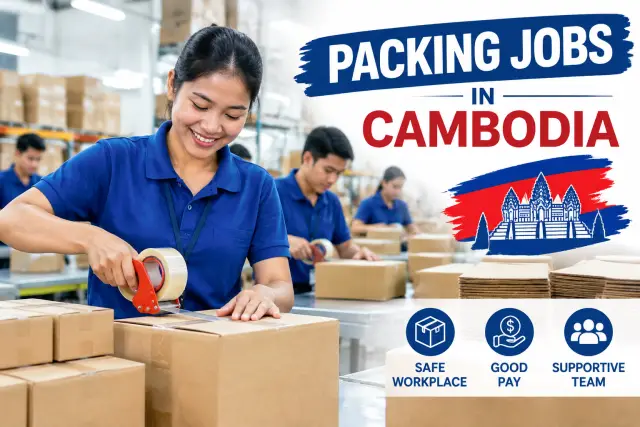
What do packing jobs in Cambodia actually involve?
Some packing jobs mean folding boxes and getting orders ready for delivery. Others involve sorting clothes at a garment factory, checking food labels, or sealing products on a production line. Same job title, pretty different days.
Most employers want people who can follow instructions, work with a team, and keep an eye out for damaged items. You'll usually spend a fair amount of time standing, though that depends on the workplace. Some roles include lifting and moving stock, too.
If you're looking for packing jobs in Cambodia, don't just search for “packer.” Try “packing staff,” “warehouse worker,” “production worker,” “packaging assistant,” and “factory helper” as well. Job titles aren't always consistent.
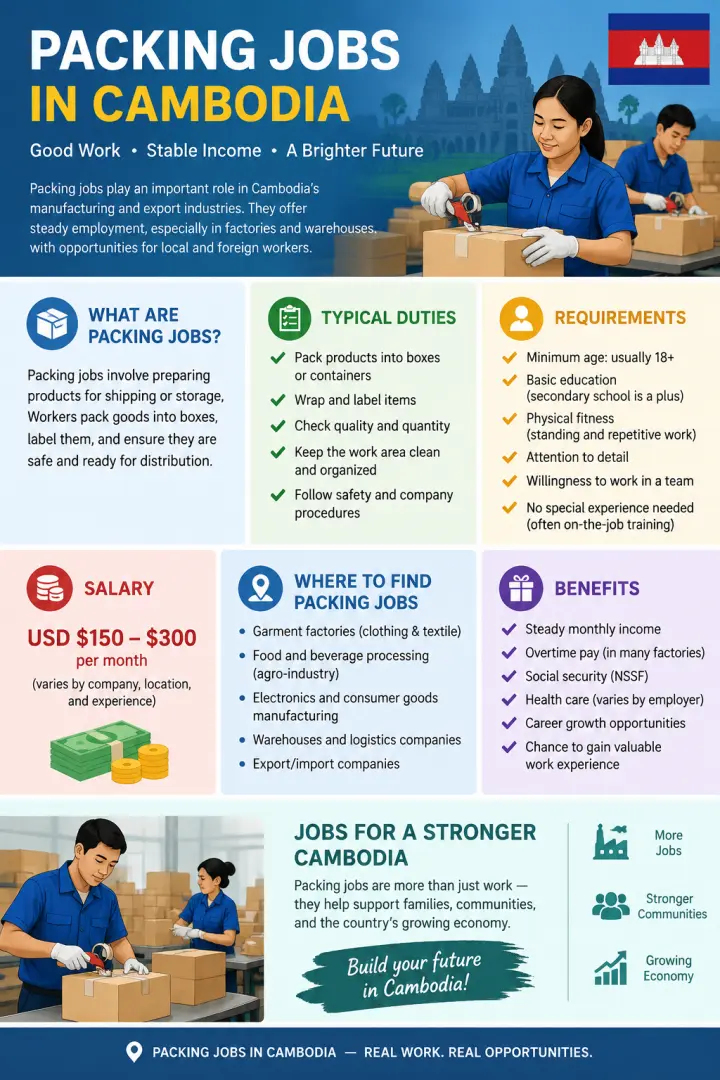
Where can you find packing work?
Phnom Penh has warehouses, factories, and businesses that prepare goods for local delivery. You'll also find industrial areas and factories in Kandal and Kampong Speu, while other opportunities may come up around special economic zones and provincial towns.
Location matters more than people sometimes expect. A job may look close on a map, but the daily trip can eat into your pay once you add transport and meals. Ask about the exact worksite before you agree to an interview.
Factories and garment businesses
Garment, footwear, and other manufacturing businesses may hire staff to fold finished products, attach labels, count items, and pack them into cartons. Some workers also check for stains, loose threads, or mismatched sizes before anything goes into a box.
Speed can matter on a production line. So can accuracy. Sending out a carton with the wrong sizes isn't a small mistake for the people dealing with the order later.
Warehouses and online orders
Warehouse packing jobs often involve picking products from shelves, checking order details, wrapping items, and preparing parcels for delivery. You might use a barcode scanner or fill in a simple stock sheet. Some employers train new staff on the job, so it isn't always necessary to have warehouse experience.
Expect questions about shift times, lifting, and whether you can work during busy periods. If a listing says “warehouse assistant,” read the full description — it may include packing along with cleaning, loading, or stock counting.
Food and agricultural products
Food packing work can include weighing products, sealing bags, checking dates, and keeping the work area clean. Depending on the product, you might need to wear gloves, a hair covering, or other protective gear.
Rice, fruit, fish, and other agricultural products may be packed near farms, processing sites, or distribution centres. Conditions vary quite a bit. Ask whether the work is indoors, whether there's a cold room, and what equipment is supplied.
How much do packing jobs in Cambodia pay?
There's no single salary for every packing job in Cambodia. Pay depends on the employer, industry, location, shift, and your experience. A warehouse job with night shifts may be advertised differently from a daytime role at a small shop.
For garment, textile, and footwear workers covered by Cambodia's minimum wage rules, check the latest official rate and whether it applies to the position you're considering. Other types of packing work may fall under different pay arrangements. Don't assume a rate quoted in an old social media post is still current.
Before accepting an offer, get clear answers on:
- Base pay and whether it's quoted per month, day, or hour
- How overtime is approved and paid
- Working hours, rest days, and any night shifts
- Attendance bonuses or other payments, including the conditions for receiving them
- Deductions for meals, transport, accommodation, or anything else
- When you'll be paid and whether you'll receive a payslip
And ask if the advertised amount includes overtime or bonuses. A big number can look less appealing when you find out it's based on long hours six days a week.
Do you need experience to get hired?
Not always. Many entry-level packing jobs are open to people without a long work history, especially if the employer provides training. Still, any experience handling stock, working in a shop, cleaning, sewing, or helping with deliveries can be useful.
Employers may look for basic counting and reading skills, attention to detail, and the ability to follow safety instructions. Some roles need basic computer skills or experience with scanning equipment. Others don't.
Khmer is useful for many local workplaces. An employer may also ask for English or another language, particularly if instructions or stock records are written in it. If you're not sure, ask what language is used on the job rather than guessing from the advert.
What about age requirements?
Check the legal age and any restrictions that apply to the work. Cambodia has rules on minimum working age and on work that may be unsafe for young people. An employer shouldn't put a young worker into a hazardous role just because the job is called “packing.”
If you're under 18, ask about the hours, equipment, lifting, and conditions before applying. You can also check current guidance with Cambodia's Ministry of Labour and Vocational Training.
Where to search for packing jobs in Cambodia
Start with job websites and company pages, then check local notices and trusted contacts. Packing roles aren't always advertised in exactly the same places as office jobs.
- Search Cambodian job platforms such as BongThom, CamHR, and Khmer24. Check listings carefully, especially when they're posted by individuals.
- Look at the career pages or official social media accounts of factories, delivery companies, retailers, and warehouse operators.
- Ask friends or relatives who work in factories whether their employer is hiring — but still confirm the details with the company yourself.
- Check local employment services and Ministry of Labour and Vocational Training channels for job information or recruitment events.
Try searches in both English and Khmer if you're comfortable doing so. Add your preferred location, such as “packing jobs in Phnom Penh” or “factory packing jobs in Kandal,” to narrow things down.
And keep a simple note of where you've applied. Company name, contact number, job title, and the date. It's surprisingly easy to mix up two warehouse listings when both say they're hiring immediately.
A simple CV can be enough
You don't need a fancy design for an entry-level packing application. A clear one-page CV is often a good place to start. Include your name, a working phone number, your location, education, and any relevant jobs or training.
No formal experience? That's okay. Mention practical work you've done, if it's true — helping in a family shop, sorting products, taking inventory, or preparing orders. Be specific without making the job sound bigger than it was.
For example, you might write: “Helped sort and pack shop orders, checked quantities, and kept the storage area tidy.” Change that to match what you actually did, of course.
Some employers may ask for identification or other documents during recruitment. Find out what they need and why before sending copies, and avoid posting personal documents publicly in job groups.
Applying by message
Keep your first message short and polite. Give your name, say which role you're interested in, and ask whether it's still open. You could also mention your location and any related experience.
Something like: “Hello, I'm interested in the packing assistant job advertised for Kandal. Is the position still available? I have experience helping with stock in a shop. Thank you.”
Before you send your CV, check that you're speaking to the real employer or an authorised recruiter. A company logo on a profile isn't proof by itself.
Questions to ask before you accept
An interview isn't just for the employer. It's your chance to find out what the job will actually be like. If the answers are vague, keep asking.
- What's the full address of the workplace, and who will supervise me?
- What will I pack, and will I need to lift heavy items?
- What are the normal shifts and rest days?
- Is overtime required, and how is it paid?
- Will I receive a written contract? Can I read it before signing?
- Is protective equipment provided, and is there any charge for it?
- Does the job include National Social Security Fund registration and other benefits that apply to the role?
If transport or accommodation is offered, ask where it is, what it costs, and whether you're free to make your own arrangements. Free housing sounds useful, but the details matter.
Watch out for fake packing job offers
A genuine offer should have a real employer, a clear work location, and reasonable answers about duties and pay. Be wary of anyone promising unusually high earnings for very little work, especially if they won't explain the business.
Don't pay an upfront fee just to secure a job. Be cautious if a recruiter asks you to transfer money for training, a uniform, a medical check, or transport before you've independently checked the offer. A request for money isn't always explained honestly.
Other warning signs? Pressure to travel immediately, interviews only through private chat, a location that keeps changing, or someone asking to keep your passport or identity documents. Don't hand over original documents for an employer or recruiter to hold.
Tell someone you trust where you're going for an interview. Meet at a verified business location when possible, and arrange your own transport if you can. If you feel unsafe or think you've been trafficked or forced into work, contact local police, your embassy if you're a foreign national, or a trusted anti-trafficking organisation for help.
Can foreigners apply for packing jobs in Cambodia?
Some employers may consider foreign applicants, but don't assume every vacancy is open to non-Cambodian workers. Ask the employer about eligibility before spending money on travel or paperwork.
Foreign workers generally need the appropriate immigration status and work authorisation. Requirements and procedures can change, so check current rules with Cambodia's Ministry of Labour and Vocational Training and the relevant immigration authorities. A tourist entry alone shouldn't be treated as permission to work.
Get the job offer and terms in writing, and make sure you understand who's responsible for any work permit application and related costs. If a recruiter tells you to enter on a tourist visa and says the paperwork will somehow be sorted later — well, ask for proper advice before going any further.
A few practical things for your first week
Wear suitable closed shoes if the employer recommends them, and ask what clothing or protective equipment you'll need. Bring water if the workplace allows it. If you're unsure how to lift a carton or use a machine, ask someone to show you rather than trying to figure it out in a rush.
Keep copies of your contract and any documents you sign. Write down your shifts and overtime, too. That makes it easier to check your first payslip and raise a question if something doesn't match.
And if a task feels unsafe, speak to your supervisor. A packing job shouldn't mean guessing your way around moving equipment or lifting more than you can manage.
Frequently asked questions
Are there part-time packing jobs in Cambodia?
They can come up, particularly with retailers, small businesses, and businesses that handle seasonal orders. Many factory and warehouse roles are full-time, though. Check the schedule before applying rather than relying on the job title.
Can I apply without a CV?
Some employers may accept a basic application form or an initial phone call. Others will want a CV. Having a simple one ready gives you more options, even if it only covers your education and a little practical experience.
Are packing jobs paid weekly or monthly?
Payment schedules vary by employer and contract. Ask when wages are paid, how they're paid, and how overtime or deductions will appear. Get those details in writing where possible.
How can I tell if a packing job is real?
Check the employer's contact details through an independent source, confirm the workplace address, and ask for a written offer with clear terms. Be especially careful with requests for upfront payment or original identity documents.