


Driver jobs in Cambodia can look very different depending on who’s hiring. One role might mean taking a company manager to meetings in Phnom Penh. Another could involve delivering parcels around Siem Reap, driving a truck between provinces, or picking up hotel guests at the airport.
Before sending out applications, get clear on the vehicle you’re licensed to drive and the hours you can actually work. That’ll save you time. And it’ll help you spot a job that fits your life, not just one with a decent-looking salary.
What kinds of driver jobs are available?
Some employers want a driver for a regular Monday-to-Friday schedule. Others need someone on weekends, at night, or whenever a delivery comes in. Read the details carefully (especially the parts about overtime).
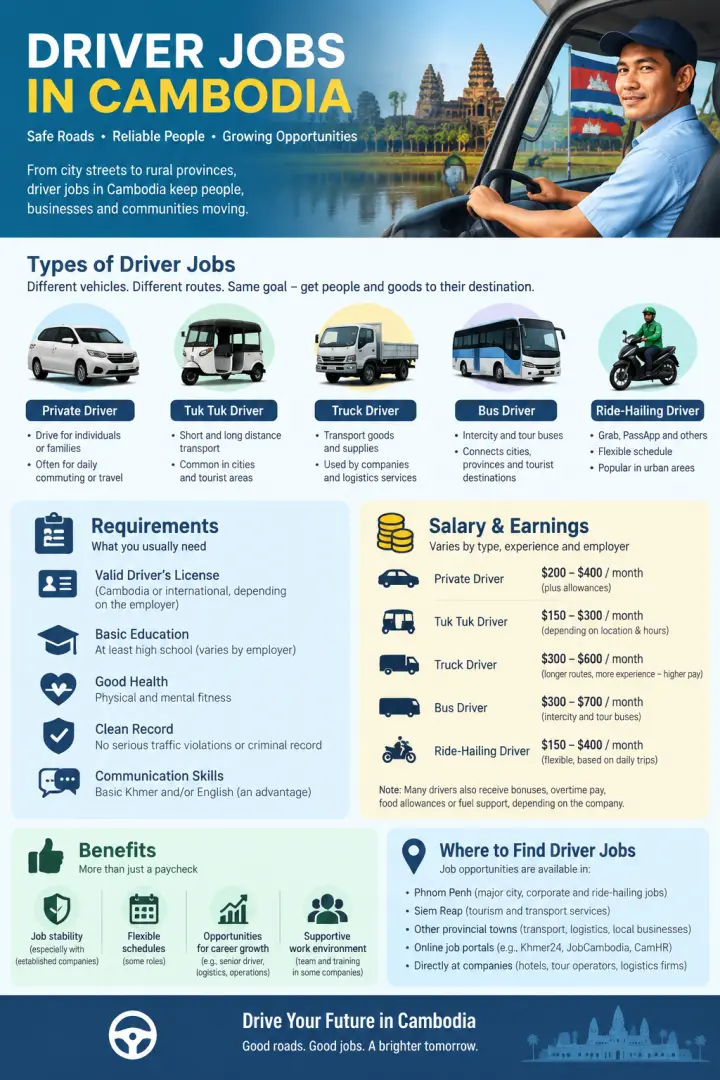
Company and personal drivers
Company drivers usually transport staff, clients, or documents. A personal or family driver might handle school runs, appointments, errands, and trips outside the city.
These jobs often call for a tidy appearance, a good driving record, and some flexibility. An employer may also ask you to keep the car clean, arrange servicing, or know your way around Phnom Penh without relying on directions every minute.
Discretion matters too. If you’re driving a family or company director, you may hear private conversations. Keeping those private is part of the job, even if it isn’t written in the ad.
Delivery drivers and riders
Shops, restaurants, logistics firms, and delivery platforms hire people to move food, parcels, and other goods. Depending on the role, you might use a motorbike, tuk-tuk, van, or small truck.
Look closely at who provides the vehicle and pays for fuel. Some jobs use a fixed monthly wage, while others pay per delivery or offer a mix. A busy day can sound promising, but repair costs and waiting time can eat into what you take home.
Truck and van drivers
Truck drivers may carry construction materials, retail goods, farm produce, or other cargo between cities and provinces. Van drivers can work in passenger transport, tourism, or deliveries.
These roles can involve long days and early starts. For larger vehicles, employers may ask for the right licence category, previous experience, and familiarity with loading or vehicle checks. Don’t assume a car licence covers every truck or passenger vehicle.
Hotel, airport, and tourist drivers
Hotels and tour operators hire drivers to collect guests, handle luggage, and make trips to places like Angkor Archaeological Park or the coast. Basic English can help, and another language may be useful for some employers.
That said, you don’t have to sound like a tour guide for every job. Being on time, driving safely, and communicating clearly can go a long way.
Where to look for driver jobs in Cambodia
Phnom Penh has a wide range of openings because it’s home to offices, businesses, embassies, hotels, and delivery companies. You’ll find company driver roles there, along with plenty of parcel and food delivery work.
Siem Reap is worth checking if you’re interested in hotels or tourism. Sihanoukville and other coastal areas can have hospitality, transport, and logistics roles, while jobs in other provinces may be tied to farms, warehouses, construction, or local businesses.
Don’t limit your search to one website. Try a few places:
- Cambodian job websites and the career pages of companies you’d like to work for.
- Local Facebook groups and Telegram channels that share vacancies. Check who posted the ad before sending personal information.
- Hotels, schools, transport firms, and logistics companies near you. Some accept applications directly.
- Friends and former coworkers who know you’re looking. A personal recommendation can help, but you should still check the terms yourself.
Search in both English and Khmer if you can. Useful English searches include “driver jobs in Cambodia,” “company driver Phnom Penh,” “delivery driver Cambodia,” and “truck driver jobs Cambodia.” Add your city or province to narrow the results.
Licences and other requirements
The right driving licence depends on the vehicle and the work. Check the category requested in the job ad, then make sure your licence is valid for that vehicle. For rules on licences, renewals, or foreign licences, check with Cambodia’s Ministry of Public Works and Transport or the relevant licensing office.
Employers may also ask for some of the following:
- A copy of your national ID or other identification.
- A valid driving licence and, sometimes, proof of driving experience.
- References from a previous employer or someone who knows your work.
- Basic Khmer or English, depending on the passengers and workplace.
- A phone you can use for calls, maps, or delivery apps.
- Willingness to work evenings, weekends, or travel between provinces.
Not every employer asks for all of these. A family looking for a driver may care more about references and reliability than formal education. A logistics company might focus on your experience with a particular vehicle and delivery routes.
If you’re a foreign applicant, don’t assume that permission to enter Cambodia automatically gives you permission to work or drive for pay. Check the current visa, work permit, and driving licence requirements with the Cambodian authorities and your prospective employer before accepting a role.
How much do driver jobs pay?
There isn’t one reliable salary figure for every driver job in Cambodia. Pay changes with the city, vehicle, experience, working hours, and employer. A long-distance truck role and a part-time family driver job aren’t really comparable.
When an ad gives a monthly amount, ask what it covers. Is that the basic wage, or does it include overtime and allowances? If you’re paid per trip or delivery, ask how many jobs drivers typically receive and whether there’s a minimum payment.
And check the costs on your side. Fuel, phone data, parking, vehicle repairs, and meals during long trips can make a noticeable difference to your earnings. Get the answers in writing where possible.
Questions to ask before you say yes
- What are the normal working hours and weekly days off?
- How is overtime calculated, and when is it paid?
- Who pays for fuel, tolls, parking, and maintenance?
- Will I use my own vehicle or a company vehicle?
- Is there a written contract, and how long is the probation period?
- What happens if the vehicle breaks down or there’s an accident?
Also ask about insurance and any social security registration or other benefits that apply to the role. Employment rules and benefits can depend on the arrangement, so check current information with Cambodia’s Ministry of Labour and Vocational Training or the National Social Security Fund if you’re unsure.
Make your application easy to read
You don’t need a fancy CV to apply for most driver jobs. Keep it clear and honest. Include your name, phone number, location, licence category, and the types of vehicles you’ve driven.
For each past role, mention the employer, dates, and a few useful details. Did you drive a passenger van between Phnom Penh and Siem Reap? Deliver goods to shops? Take care of a company car? Those details tell an employer much more than “good driver.”
If you’re new to paid driving, say so. You can still mention relevant experience, such as years of licensed driving, familiarity with local roads, or work that involved dealing with customers. Don’t claim professional experience you haven’t had.
A short message works well when you contact an employer:
“Hello, I’m interested in your driver vacancy in Phnom Penh. I have a valid licence for the vehicle listed and experience driving a company car. May I send you my CV?”
Change the details to match your own experience, of course. And check that the vacancy is still open before sending copies of your documents.
What to expect at an interview or driving test
An employer may ask about your routes, previous jobs, and how you handle heavy traffic. They might want to know whether you can work late, travel overnight, or use a navigation app. Answer honestly. A job that needs frequent overnight trips may not be a good fit if you can’t be away from home.
You may also be asked to take a driving test. Bring your valid licence, follow the instructions, and take a moment to adjust the mirrors and seat before starting. It’s okay to ask what the route or test involves.
For a delivery role, ask how orders are assigned and what happens when a customer can’t be reached. For a family driver job, get a clear picture of the schedule. “Flexible hours” can mean a lot of things.
Watch out for job scams
Be careful with ads that promise unusually high pay but give almost no details about the employer or vehicle. Pressure to accept immediately is another reason to slow down.
Don’t pay someone just to secure an interview or guarantee you a job. And don’t hand over your original passport, ID, or licence to a recruiter to keep. If an employer needs to verify a document, ask how they’ll handle the copy and why they need it.
Meet at a real business location when possible, check the company’s contact details, and tell someone where you’re going. If the job description changes completely after you arrive, you can walk away.
A few things that can help you get hired
Keep your licence current and your contact number active. It sounds basic, but an employer can’t invite you for a test if they can’t reach you.
References help too. Ask a former supervisor or customer if they’re comfortable being contacted, and give them a heads-up when you apply. If you’re aiming for hotel or airport work, practising a few useful English phrases for greetings, pickup locations, and delays may be worthwhile.
Look, the best driver job isn’t always the one with the biggest number in the ad. A clear schedule, a well-maintained vehicle, and an employer who answers your questions can make a big difference once you’re on the road.