


Packing jobs in Kenya don't get much attention. Nobody's posting about them on LinkedIn. But walk through Industrial Area in Nairobi at 6 a.m. and you'll see hundreds of people heading to exactly these jobs.
So let's talk about what they really are, where they are, and whether they're worth your time.
What does a packer actually do?
Pretty much what it sounds like. You put products into boxes, bags, cartons or crates. Then you seal them, label them, and stack them so someone else can load them onto a truck.
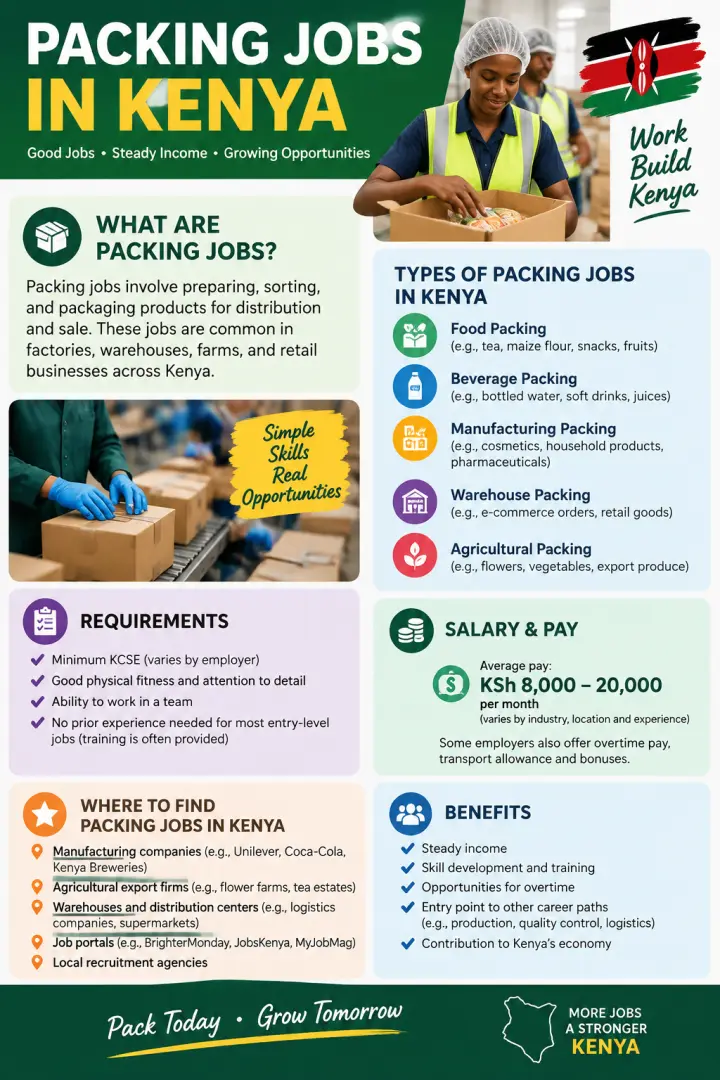
But the details change a lot depending on where you work. At a flower farm, you're bunching roses and fitting them into boxes fast, before they wilt. In a factory making biscuits or soap, you're standing at a conveyor belt picking up finished items. At a supermarket warehouse, you might be putting together mixed orders for different branches.
Same word, very different days.
Where the jobs are
Honestly, location matters more than anything else. Here's where I'd look first.
- Nairobi's Industrial Area and Embakasi. Loads of manufacturers, food processors and distributors packed into a small space.
- Athi River and Mlolongo. Big factories, plus the EPZ (Export Processing Zone) where garment and goods exporters operate.
- Thika and Ruiru. Food companies, packaging plants and some pineapple and coffee-related work.
- Naivasha and Limuru. Flower farms, mainly. Naivasha is the big one.
- Mombasa. Port-related warehouses, cereal handlers, cashew and spice packing.
- Central and Eastern Kenya. Avocado, macadamia and French bean packhouses, especially in Murang'a, Kiambu, Meru and Embu.
Don't ignore the smaller towns either. Kisumu, Nakuru and Eldoret all have mills, dairies and distributors who hire packers regularly, and fewer people apply there.
The types of employers
Factories
Steady work, usually. Some hire permanent staff, but plenty rely on casuals first and then pick the best ones for contracts. If you show up on time every day and don't cause drama, you get noticed. Simple as that.
Farms and packhouses
Seasonal, often. Exports spike around Valentine's Day for flowers, for example, and the farms hire like crazy beforehand. Pay can be okay, but the hours are long during peak weeks.
Supermarkets and e-commerce
This one's growing. Online shops and delivery businesses need people to pick and pack orders from small warehouses. The work is lighter than factory lines, and a smartphone skill or two helps. Naivas, Quickmart and the courier companies sometimes advertise these roles, though not always loudly.
Small businesses
Wholesalers, mama mboga suppliers, packaging for cereals and flour, even local cosmetics brands. Pay can be lower here. But it's easier to get in, and the boss often knows your name.
What's the pay like?
Not gonna lie, it's not glamorous. Most entry-level packers in Kenya earn somewhere around KSh 15,000 to 22,000 a month, depending on town, employer and whether you're casual or permanent. Nairobi, Mombasa and Kisumu have a higher legal minimum for general workers than smaller towns, so check the current Regulation of Wages order from the Ministry of Labour.
Casual workers are often paid daily, say KSh 500 to 800. It adds up if you get work most days. But it's irregular, and that's the catch.
Overtime can make a real difference. A factory that runs extra shifts before month-end or festive seasons will pay more for those hours. Some people live for that overtime. Others burn out.
Also, check your payslip. Statutory deductions like NSSF, SHIF and the housing levy come off your gross pay, so what hits M-Pesa or your bank is less than the number in the offer letter. Ask about it before you sign, not after.
What employers want (it's less than you think)
Most packing roles don't need a degree. Some ask for KCPE or KCSE, many don't. What they do care about:
- Being on time. Seriously, this is number one.
- Being able to stand for hours without complaining.
- Basic counting and reading, since you'll check labels, batch numbers and quantities.
- Honesty. Warehouses lose stock and they notice who's careless.
- Hygiene, especially in food and flower packing. Some places want a medical certificate, and food handlers often need one.
Speed helps, but accuracy matters more. A fast packer who sends the wrong items to a client is worse than a steady one.
How to find openings
Here's the thing. Most packing jobs never reach the big job boards. Supervisors hire through word of mouth, notice boards at the gate, and WhatsApp groups.
So I'd do a mix:
- Check BrighterMonday, MyJobMag and Fuzu, searching for packer, warehouse assistant, production operator and general worker.
- Visit factories directly. Go with copies of your ID, certificates and a short CV. Some will tell you at the gate that they're hiring next week.
- Join local job groups on Facebook and WhatsApp, but verify before you trust anything.
- Ask people already working there. A referral beats a cold application nearly every time.
- Look at casual labour agencies. Several firms in Nairobi supply temporary staff to factories.
And keep your documents ready. National ID, KRA PIN, NSSF and SHA numbers, passport photos. Having everything in one folder saves you from losing a job because you were missing a form.
The scams, because they're everywhere
Real talk. Packing jobs are a favourite bait for fraudsters. Especially the ones that promise work abroad, in Dubai, Qatar, Canada or Europe, with high pay and no experience needed.
If anyone asks you to pay a fee to get a local packing job, walk away. Genuine employers don't charge for recruitment. Not for uniforms, not for training, not for registration.
Watch for these red flags:
- Someone messages you on WhatsApp offering a job you never applied for.
- They ask for money sent to a personal M-Pesa number.
- The salary sounds way too good for the work.
- They won't tell you the company's physical address.
- They rush you to decide today.
For overseas work, only deal with agencies licensed by the National Employment Authority (NEA). You can check their list. And please, tell your family where you're going and who hired you. I've heard too many stories that started with a nice-sounding promise.
Casual vs contract: what to ask
Casual work isn't bad, but know what you're getting into. Ask how long the contract runs, how often you're paid, and whether you'll be moved to permanent after a period. Under Kenyan law, casuals who work continuously for a certain period can be entitled to more rights, so it's worth reading up on the Employment Act.
Ask about the shifts too. Some factories run night shifts, and the allowance may or may not be worth it. Ask about transport as well, since some employers provide it and others don't. A KSh 200 daily matatu fare can eat a big chunk of a small salary.
Tips to actually keep the job
Landing it is one thing. Staying is another.
Wear comfortable closed shoes. Your feet will thank you by week two. Bring water, bring a small snack if breaks are short, and learn the safety rules early, because machines and forklifts aren't forgiving.
Be friendly with the supervisor. Not fake, just respectful. They decide who gets overtime and who gets the permanent slot.
And if there's a chance to learn something new, take it. Operating a labelling machine or learning inventory counts moves you from packer to line leader, or into stores. That's where pay starts to climb a bit.
Is it worth it?
Depends on where you're starting. If you need income fast and don't have formal qualifications, packing is one of the quicker doors in. It won't make you rich. But it builds work history, gives you references, and can lead to supervisor or warehouse roles.
If you're already skilled in something else, treat it as a stepping stone, not a destination. A few months in, you'll know which companies are decent and which ones to avoid. That knowledge is worth more than people think.
So start local, stay careful, and keep your documents ready. Opportunities pop up quickly in this line of work, and the people who get them are usually the ones who showed up first.