


What kind of driving work can you find in Finland?
Driver jobs in Finland range from delivering parcels around Helsinki to hauling timber through snowy roads in the north. Some roles need a standard car licence. Others call for a heavy vehicle licence, professional training and a fair bit of patience behind the wheel.
And the work can look very different depending on where you land. A city bus driver might follow the same route every day, while a long-haul truck driver could spend nights away from home.
Truck and heavy goods drivers
Truck drivers move food, building supplies, fuel, timber and all sorts of other goods. Jobs may involve local deliveries, routes between Finnish cities or international trips across Europe.
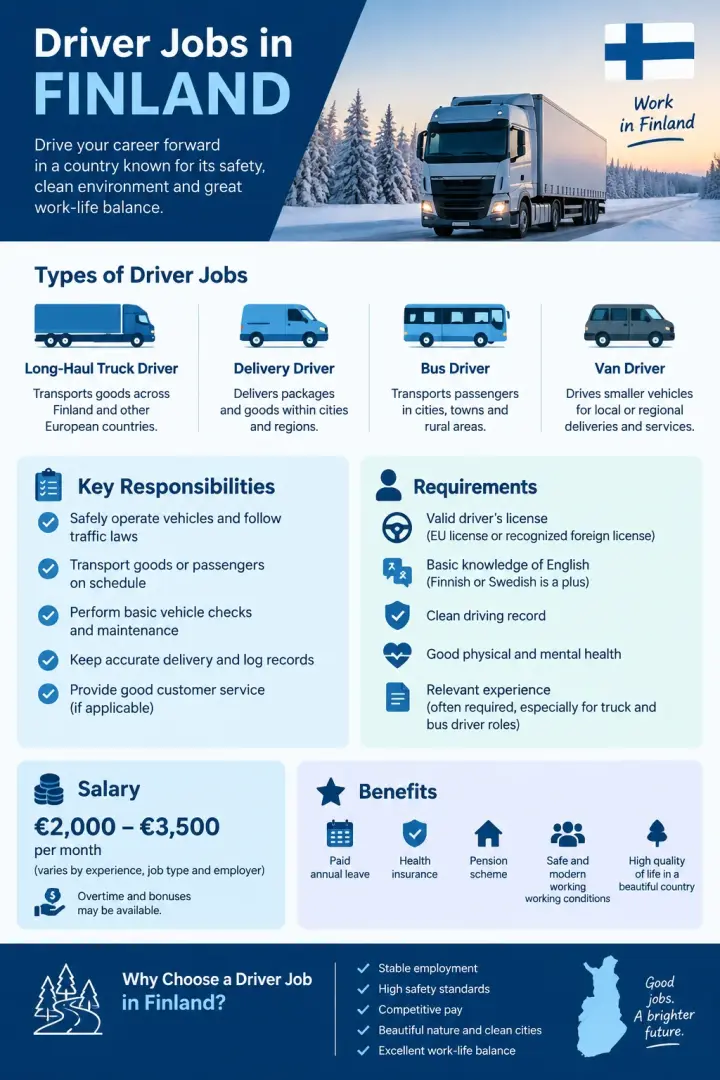
For many heavy truck roles, you’ll need a category C licence. If the job involves a heavy trailer, category CE is often required. Employers may also ask for professional driver qualifications, a digital tachograph card and experience with loading equipment.
Some specialist work needs extra training. For example, transporting dangerous goods usually calls for an ADR certificate. Tanker and timber jobs can come with their own equipment requirements, so read the vacancy closely before applying.
Delivery and van drivers
Parcel delivery, grocery delivery and courier work can be a way into the Finnish job market. Many van roles ask for a category B driving licence, though the right licence depends on the vehicle’s weight.
Don’t assume the job’s just driving, though. You might be lifting packages, finding apartment entrances, using a delivery app and working to tight schedules. In winter, even a short stop can take longer than you’d think.
Bus and coach drivers
Bus jobs include city routes, school transport, charter trips and longer journeys between towns. A category D or D1 licence may be needed, depending on the vehicle, along with the relevant professional driver qualification.
Customer service matters here. You’ll be dealing with passengers, tickets, accessibility needs and the occasional question about a missed stop. Finnish or Swedish can be especially useful, and many employers ask for one of them.
Taxi drivers
Taxi work can mean airport transfers, local trips or transport booked for people who need extra help. You’ll generally need a taxi driver’s licence from Traficom, Finland’s transport authority, rather than just a regular driving licence.
Requirements can include an approved driving licence, a medical certificate and passing a taxi driver examination. Check the current rules with Traficom, especially if your licence was issued outside Finland. And if you want to run your own taxi business, that’s a separate set of permits and responsibilities.
What do driver jobs in Finland pay?
Pay depends on the vehicle, hours, location, experience and the collective agreement that applies to the job. A night shift or Sunday route may pay differently from a weekday daytime shift. Overtime and allowances can change the final amount too.
As a rough starting point, full-time monthly pay might look something like this, before tax:
- Van and parcel delivery: around €2,100–€3,000.
- Bus driving: around €2,500–€3,500.
- Truck driving: around €2,600–€3,800, sometimes more for specialist work or additional hours.
These aren’t guaranteed rates. Taxi earnings are harder to compare because arrangements vary: some drivers are employees, while others work as entrepreneurs or under commission-based agreements. Ask how pay is calculated and whether waiting time, evenings and Sundays are covered.
Honestly, the number in a job ad doesn’t tell you everything. A decent hourly rate can look less appealing if the hours aren’t guaranteed or you’re paying vehicle costs yourself.
Can you use your foreign driving licence?
Maybe. It depends on where your licence was issued, whether you’re living in Finland and the type of vehicle you want to drive.
EU and EEA driving licences are generally recognised in Finland while they’re valid. Licences issued elsewhere may be accepted for a limited period or may need to be exchanged, depending on the country and your circumstances. Not every foreign licence can be exchanged without additional steps.
Professional driving brings another layer. Holding a truck or bus licence doesn’t automatically mean you meet Finland’s professional qualification rules. Check both your licence and your professional driver qualification with Traficom before accepting a job. Your employer can help explain what the role requires, but don’t leave the checks until your first shift.
One detail people miss: a regular car licence isn’t the same thing as permission to drive every delivery vehicle. Check the vehicle category and weight listed in the vacancy.
What’s the professional driver qualification?
Many truck and bus drivers need an initial professional qualification and regular further training. You’ll often hear this called the Driver CPC or Code 95.
For drivers who need the qualification, continuing training generally means 35 hours every five years. There are exceptions for certain types of driving, but don’t count on one applying to a job without checking. Traficom has the current rules, including how qualifications obtained in another country are recognised.
Do you need a work permit?
If you’re an EU or EEA citizen, you can generally work in Finland without a residence permit for employment. Longer stays may require registration of your right of residence. Nordic citizens follow their own registration rules.
For many applicants from outside the EU and EEA, a suitable residence permit is needed before starting work. The right permit depends on your situation and the job. In some cases you’ll need a residence permit for an employed person, and your employer will need to provide information about the employment.
Already have a Finnish residence permit? Check the work rights attached to it. They aren’t identical for every permit.
Use the Finnish Immigration Service, Migri, for current rules and application steps. Processing times and requirements can change, so it’s smart to check before making travel plans or paying anyone to arrange a job.
Do you have to speak Finnish?
Not for every role. Some logistics companies use English, and an international transport job may involve an English-speaking team. But Finnish opens more doors, especially for local deliveries, bus work and jobs with regular customer contact. Swedish can help in some areas too.
Look at the actual duties. You may need to read delivery instructions, call a customer, understand safety notices or talk to a dispatcher when something goes wrong. A few everyday Finnish phrases can be useful even when the listing says English is enough.
And if your Finnish is still basic, say so clearly in your application. It’s better than getting through an interview and finding out the job involves phone calls you can’t manage yet.
Where to look for driver jobs in Finland
Start with a mix of job boards and company websites. Search in English, but try Finnish terms too — you’ll find ads that don’t show up under “driver jobs in Finland”.
- Job Market Finland, also known as Työmarkkinatori, lists vacancies and employment information.
- Work in Finland has information for international jobseekers and links to open roles.
- EURES lists jobs across Europe and offers information about working abroad.
- Logistics companies, bus operators, courier firms and staffing agencies often post vacancies directly on their own sites.
- LinkedIn and local job boards can be useful, particularly for employers that recruit in English.
Try searches such as “kuorma-autonkuljettaja” for truck driver, “linja-autonkuljettaja” for bus driver and “pakettiautonkuljettaja” for van driver. “Kuljettaja” means driver. Add a city name if you’re looking in a particular area.
Helsinki, Espoo, Vantaa, Tampere and Turku are worth checking for delivery and transport work. But don’t overlook smaller towns. A logistics centre, port or local bus company may be hiring outside the biggest cities.
What should you put in your application?
Keep your CV clear and practical. An employer wants to know what you can drive, which documents you hold and whether your experience fits the route.
- List your licence categories and where your licence was issued.
- Mention Code 95, a tachograph card, ADR training or other relevant certificates if you have them.
- Include the types of vehicles and deliveries you’ve handled — refrigerated goods, for example, or city parcel routes.
- Say which languages you use and whether you can work shifts or weekends.
- Give your location and, if relevant, your current right to work in Finland.
Don’t claim qualifications you’re still waiting to get. Write “training in progress” instead. For an international applicant, a short note about when you could move and what permit you’d need can save everyone time.
A short message tailored to the vacancy helps too. If the ad mentions tail-lift deliveries and you’ve used one, say so. That’s more useful than a long paragraph about being a “hard worker”.
Winter driving is part of the job
Finland’s winters can mean ice, snow, darkness and sudden changes in visibility. Conditions vary a lot: a wet November morning in Helsinki isn’t the same as a February night in Lapland.
Employers may expect you to know how to handle slippery roads, allow extra braking distance and check your vehicle before setting off. Loading areas get icy too. Good footwear matters more than you might expect.
Finnish winter tyre rules depend on the vehicle and conditions. For cars and certain other light vehicles, winter tyres are required from November through March when weather or road conditions call for them. Heavy vehicles have separate requirements. Check Traficom’s current guidance and ask the employer who’s responsible for tyres, equipment and vehicle checks.
Before you accept an offer
Ask for the terms in writing. What are the hourly or monthly wages? Are shifts guaranteed? Who pays for training, uniforms or the drive between the depot and the first stop?
Also check whether you’ll be an employee or self-employed. That difference affects taxes, insurance, holiday pay and who covers costs. If a company wants you to use your own vehicle, get a clear picture of fuel, maintenance and insurance before saying yes.
For truck and bus work, ask about routes, rest facilities and how driving time is recorded. EU driving and rest-time rules apply to many commercial journeys, though there are exceptions. A common rule is a 45-minute break after no more than 4.5 hours of driving, subject to the applicable rules and permitted split breaks.
One more thing: be careful with anyone demanding a large upfront fee for a guaranteed job or work permit. Check the employer’s details, look for a real contract and verify permit information through Migri. If the offer feels off, it’s okay to walk away.