

Some driver jobs in Denmark start before sunrise, with a van full of parcels and a route through quiet streets. Others mean long motorway trips, airport pickups, or food deliveries on a bike. The work can look very different depending on what you drive.
So before you start applying, get clear on the licence, work permission, and hours each job actually needs. A clean-looking job ad doesn't always tell the whole story.
What kinds of driver jobs are available?
You'll find openings with transport companies, delivery firms, supermarkets, bus operators, and businesses that need their own drivers. Copenhagen, Aarhus, Odense, and Aalborg are obvious places to search, but smaller towns need drivers too.
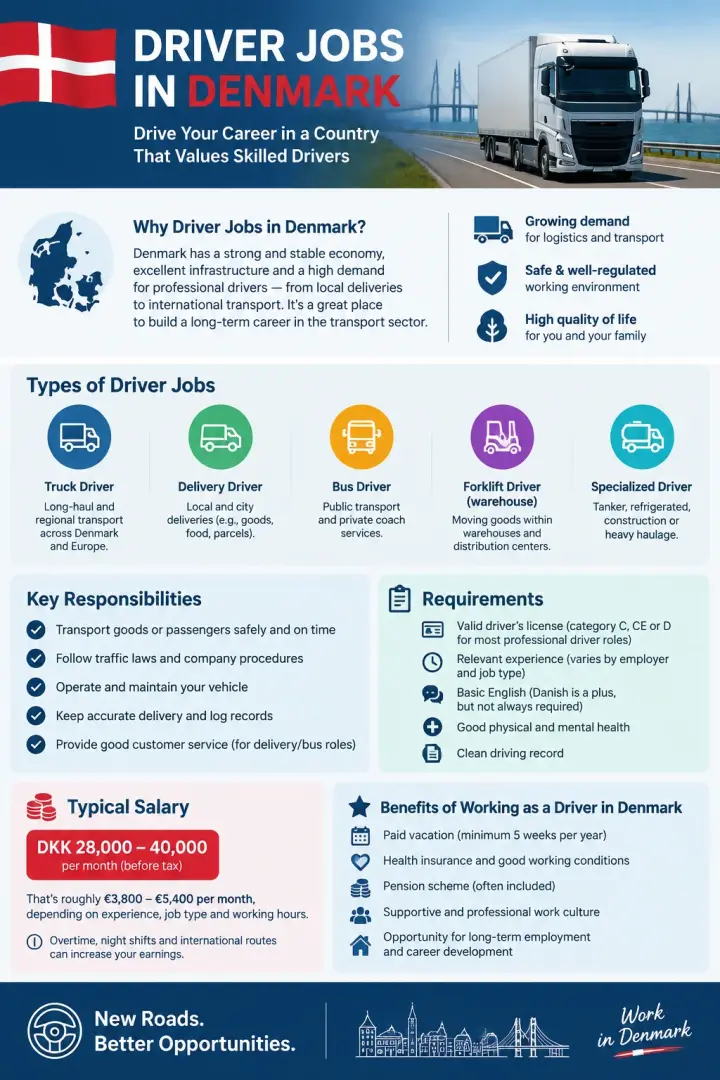
Truck and lorry driving
Truck drivers move everything from supermarket stock to building materials. Some jobs involve local deliveries and getting home at the end of the day. Others cover longer routes across Denmark or into nearby countries.
For heavier vehicles, employers usually ask for a category C licence. If the job involves a large trailer, you'll often need category CE. Many professional truck roles also require a driver qualification card with Code 95, and you may need a digital tachograph card.
There's more to the job than sitting behind the wheel. Loading checks, delivery paperwork, and keeping to driving and rest-time rules can all be part of the day. Some roles also involve lifting or using a tail lift.
Van and parcel delivery
A regular category B car licence may be enough for many van jobs. That's one reason parcel delivery can be a useful place to start if you don't have a heavy-vehicle licence.
Expect plenty of stops, though. A route with apartment blocks, locked entrances, and awkward parking is a different kind of busy from a long motorway drive. Employers may ask for delivery experience, a good driving record, and the ability to use a phone or handheld scanner.
Bus and passenger driving
Bus drivers might work on city routes, school services, or longer coach trips. You'll generally need the right passenger vehicle licence, such as category D, plus any required professional driver qualification. Check the exact requirements in each advert.
Passenger-facing work can call for stronger Danish than some freight jobs. You'll be dealing with people, after all, and may need to understand instructions or explain route changes. Some employers offer training, so it's worth checking even if you don't yet meet every requirement.
Taxi and private hire
Taxi work has its own rules. A standard car licence alone won't necessarily qualify you to carry paying passengers. Driver qualification requirements and permits can apply, and the company or vehicle may need authorisation too.
Before signing up with an operator, ask how drivers are paid, who covers the vehicle costs, and what approvals you'll need. Don't assume that an app signup is the whole application process.
Food delivery and courier work
Some couriers deliver by car or scooter. In cities, you'll also see bike couriers carrying takeaway meals or small packages. A driving licence isn't needed for an ordinary bicycle, but you still need permission to work in Denmark.
Look closely at whether you'd be an employee or self-employed. That difference can affect your taxes, insurance, equipment costs, and what happens when you're sick. A busy Friday evening might sound appealing, but ask what the earnings look like after expenses.
Can you work as a driver in Denmark with an English-speaking background?
Yes, some employers accept English-speaking drivers, particularly for roles where you don't spend much time talking to customers. But it depends on the company and the job. You'll still need to understand safety instructions, road signs, and anything required for your licence or training.
For bus, taxi, and customer-facing delivery jobs, Danish may be requested. Even basic Danish can help when you're calling a customer or speaking with a dispatcher. Look for language requirements in the listing, and ask the recruiter if they're not clear.
Driving licences and qualifications: check these first
Having driving experience in another country is useful, but it doesn't automatically mean every licence or professional certificate will be accepted in Denmark. Rules depend on where your licence was issued, the vehicle, and how long you've been living in the country.
EU and EEA driving licences are generally recognised in Denmark, though particular rules can apply to validity and professional driving. If your licence was issued outside the EU or EEA, check whether you can use it, when you may need to exchange it, and whether a test is required. Don't leave that question until your first day of work.
For truck and bus work, ask the employer which documents they need. These might include:
- A valid licence for the vehicle and trailer you'll drive.
- Proof of the required professional driver qualification, often shown as Code 95.
- A tachograph driver card for jobs where digital tachograph rules apply.
- Medical or other documentation needed for the relevant licence.
- An ADR certificate if you'll transport certain dangerous goods.
Not every item applies to every job. A parcel driver using a small van won't usually need the same credentials as someone driving a heavy lorry with hazardous cargo.
For current licence and exchange rules, check the official guidance on borger.dk. The Danish Road Traffic Authority, Færdselsstyrelsen, also has information on professional driver qualifications. If anything's unclear, ask the authority or your employer before paying for a course.
Work permits for driver jobs in Denmark
If you're an EU, EEA, or Swiss citizen, you generally don't need a Danish work permit. Registration requirements may still apply when you move to Denmark or stay longer, so check the rules for your situation.
Coming from outside the EU, EEA, or Switzerland? You'll usually need a residence and work permit that allows you to take the job. A job offer alone doesn't automatically give you permission to start, and not every driver role qualifies under a Danish work permit scheme.
Check the current options with the Danish Agency for International Recruitment and Integration, known as SIRI, at newtodenmark.dk. Your right to work may depend on your permit and its conditions. Ask the employer about the process, but use the official guidance to check any promises they make.
And be careful with agencies that promise a guaranteed visa in exchange for a large upfront fee. That's a good moment to pause.
How much do drivers earn?
There's no single pay rate for driver jobs in Denmark. It depends on the type of vehicle, experience, location, working hours, and whether a collective agreement covers the job. Night shifts, weekends, overtime, or special duties may bring extra pay, but don't assume they will.
Denmark doesn't have one general statutory minimum wage. Pay and conditions are often set through collective agreements or negotiated with the employer. Ask for the hourly or monthly gross pay in writing, along with details of pension contributions, holiday pay, and any allowances.
Gross pay isn't what lands in your bank account. Danish tax and other deductions affect your take-home amount, so check your own situation with the Danish Tax Agency, Skattestyrelsen.
Questions worth asking before you accept
- Are the hours guaranteed, or can shifts change from week to week?
- Is waiting time, loading time, or travel between stops paid?
- Is the rate before tax, and are evening or weekend extras included?
- Who pays for fuel, parking, insurance, and vehicle upkeep?
- Is there a collective agreement, and what pension and holiday terms apply?
- Will you be an employee, hired through an agency, or self-employed?
A job offering a high hourly figure can look less attractive if you're covering your own vehicle and only getting paid for completed deliveries. Ask for the details.
Where to find driver jobs in Denmark
Start with Workindenmark, the official job portal for international candidates. Jobnet and EURES are useful places to search too. You can also check LinkedIn, recruitment agencies, and the careers pages of transport companies, bus operators, and delivery businesses.
Try a mix of English and Danish search terms. Even if the advert is in Danish, you can check whether English is accepted before ruling it out.
- Truck driver: lastbilchauffør
- Driver: chauffør
- Bus driver: buschauffør
- Van or parcel driver: varebilschauffør or pakkechauffør
- Courier: bud or kurér
Search by town as well as job title. A company based outside central Copenhagen might advertise in a nearby municipality, and the commute can make a real difference when a shift starts at 5 a.m.
Some smaller employers don't keep vacancies online for long. Sending a short, polite email with your licence categories and availability can be worth a try — especially if you've spotted a local firm with its own fleet.
Make your application easy to scan
Put your licence categories near the top of your CV. For professional roles, include relevant qualifications, such as Code 95, your tachograph card, or ADR training, if you have them. Mention the countries where you've driven and the types of vehicle you know.
Be specific about work permission too. For example, you can say that you're an EU citizen, already have permission to work in Denmark, or would need the employer to discuss a permit route. Don't claim you're ready to start if your documents still need checking.
Got experience with refrigerated goods, multi-drop routes, or loading equipment? Say so. A line about a route with 40 delivery stops can tell an employer more than a vague claim that you're a hard worker (assuming it's true, of course).
Keep your contact details current and include the languages you can actually use at work. If the advert asks for a driving record, references, or certificates, have copies ready — but share sensitive documents through a trusted channel.
Moving to Denmark for the job
Once you've confirmed that you can work legally, there may be some practical setup to do. Depending on your circumstances, this can include registering your address, getting a CPR number, setting up MitID, and arranging a Danish tax card. The official lifeindenmark.dk site is a useful starting point.
Housing is worth checking early, particularly around Copenhagen. Compare the rent with the actual shift location, not just the city name in the advert. A cheap room isn't such a bargain if you can't reach the depot for an early start.
Ask about training and onboarding before you travel. Will someone show you the route? Is the first shift paid? Do you need to bring safety shoes? Small details, but they matter when you're new.
Watch out for job scams
Real employers should be able to explain the company, the role, and the contract. Check the business independently, use contact details from its official website, and be wary if a recruiter only communicates through a personal messaging account.
Don't send money for a guaranteed job or permit. And don't hand over passport details or bank information until you've checked who you're dealing with and why they need it. If the pay sounds unusually high for simple work, slow down and ask questions.
The right job should come with clear answers about the vehicle, the hours, and the paperwork. If those answers keep changing, it's fine to walk away.