

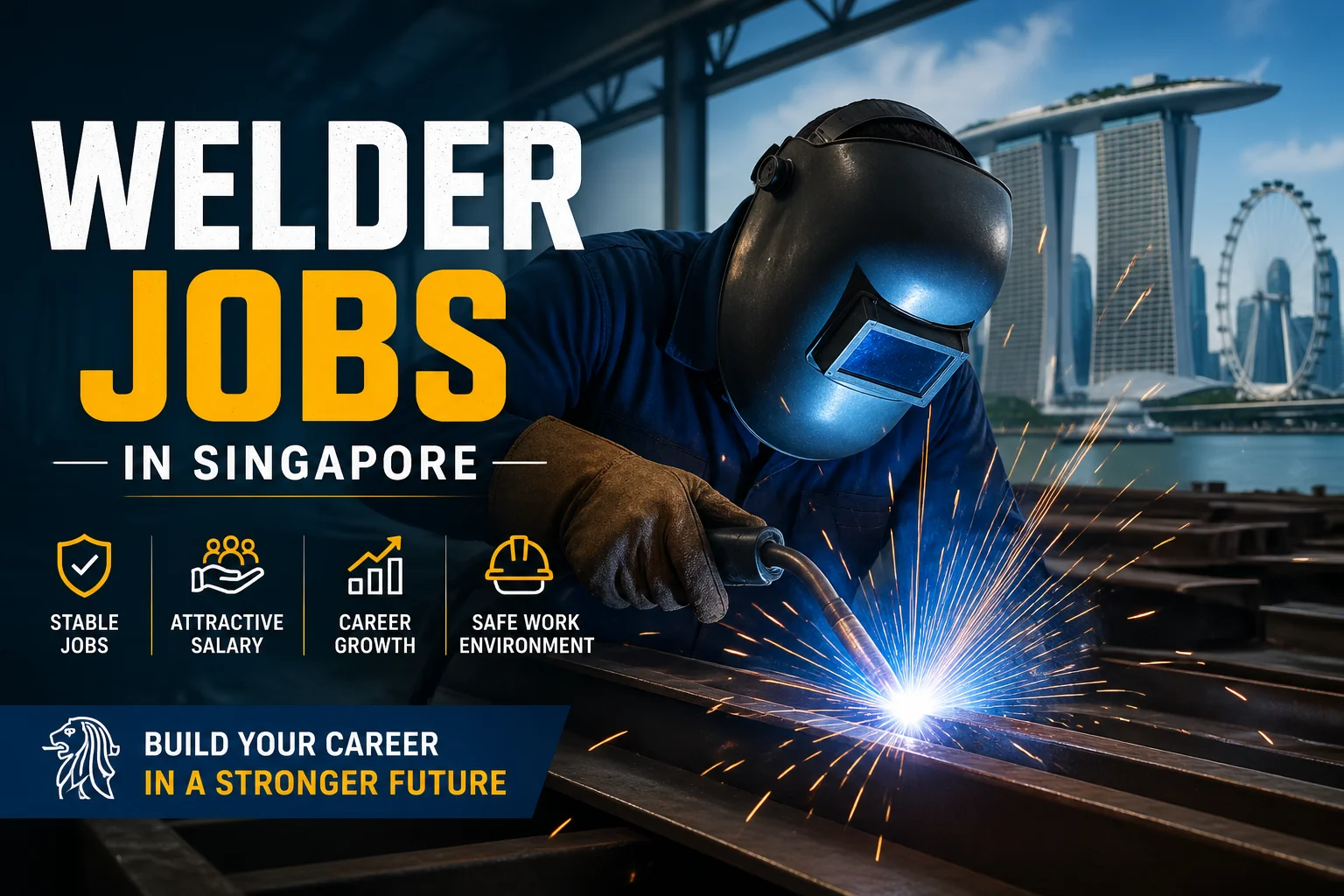
Welder jobs in Singapore aren’t what a lot of people think
People hear “welder” and picture sparks flying in a noisy workshop somewhere on an industrial estate. And yeah, that’s part of it. But in Singapore, welder jobs show up in way more places than you’d expect — shipyards, construction sites, metal fabrication shops, maintenance teams, and even some big manufacturing plants.
From what I’ve seen, the work can be steady if you’ve got the right skills and you don’t mind getting your hands dirty. It’s not glamorous. Not even close. But it can pay well enough, and for a lot of folks that’s what matters most.
What welders actually do here
Real talk, welding jobs in Singapore can look pretty different depending on the company. One day you might be doing MIG welding on steel frames. Another day it could be TIG welding on thinner metal parts. Some jobs are about building new things. Others are about fixing old ones before they fail.
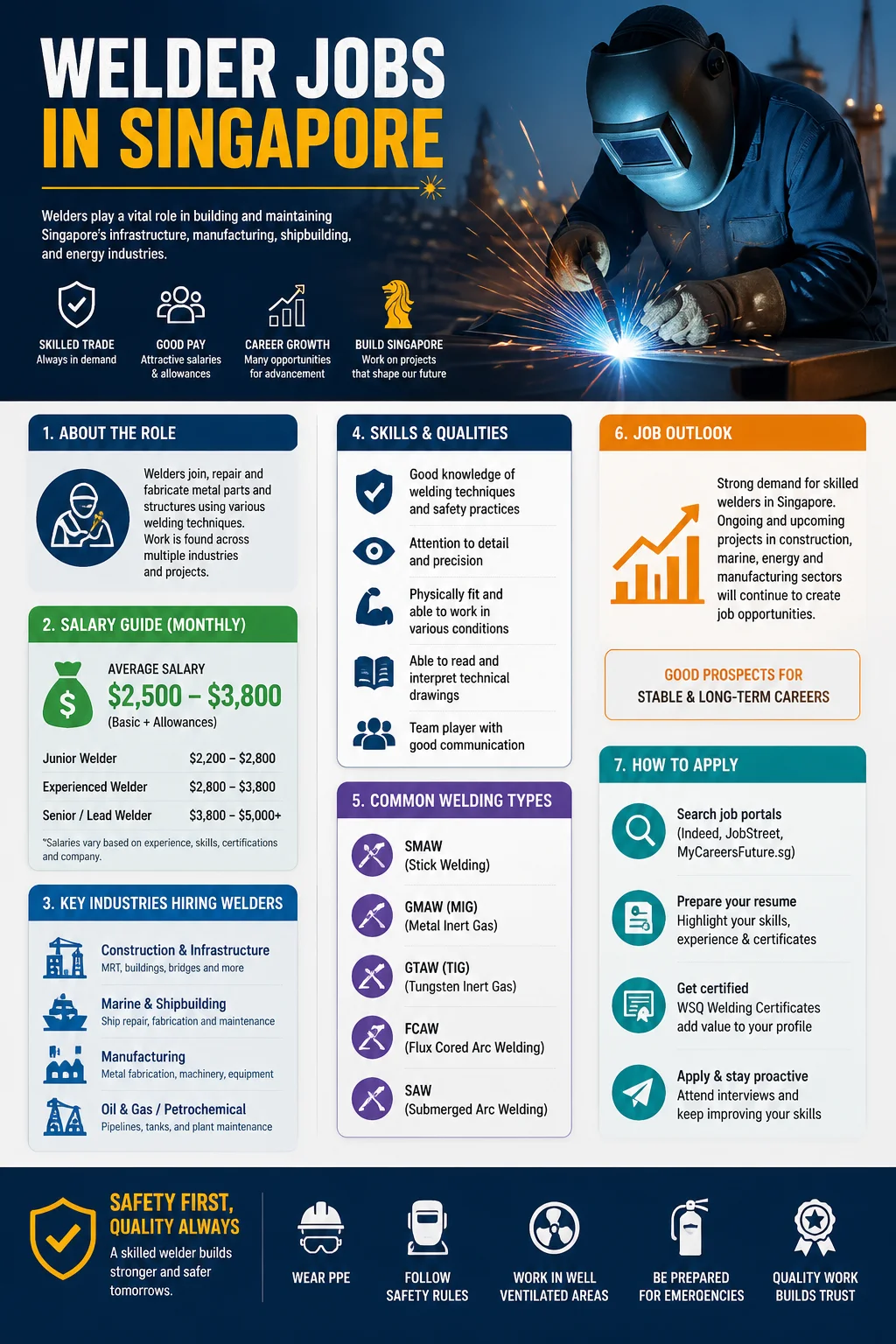
A lot of employers want welders who can read drawings, follow measurements, and work safely without being watched all the time. That last part matters more than people think. If your weld looks good but you’re careless on site, that’s a problem.
Common tasks usually include:
- Joining metal parts using the right welding method
- Checking finished welds for cracks or weak spots
- Cutting, grinding, and prepping metal surfaces
- Reading simple technical drawings or job sheets
- Following safety rules and wearing proper gear
Where these jobs are usually found
Singapore has a solid demand for skilled trades, especially in shipbuilding, repair work, and heavy industry. If you’ve ever been near Tuas or Jurong, you’ve probably passed by places where this kind of work happens all the time. Those areas are busy for a reason.
Shipyards hire a lot of welders. So do metal workshops, engineering firms, M&E contractors, and companies handling offshore or marine work. Some roles are local jobs, while others are open to foreign workers with the right permit. That mix changes a lot depending on the market and the company’s needs.
And honestly, some of the better openings aren’t even the flashy ones. Small firms can be decent if the boss is fair and the overtime is real. Big firms might offer more structure, but they can also be strict about standards and speed.
Skills employers look for
You don’t always need a fancy diploma to get started, but you do need proper welding skills. That’s the simple truth. If your bead work is messy or your joints don’t hold up, it’s hard to stay employed for long.
Most employers in Singapore look for people who can handle one or more of these welding types:
- MIG welding
- TIG welding
- Arc welding / SMAW
- Gas welding in some specialist roles
- Pipe welding for higher-skill work
It also helps if you’ve got experience with stainless steel, mild steel, or aluminium. Those materials come up a lot. And if you can work fast without cutting corners, that’s a big plus. Not everyone can do that, by the way.
Pay and working conditions
Let’s talk money, because that’s usually what people want to know first. Welder salaries in Singapore can vary a lot based on skill, industry, overtime, and whether the role is local or foreign-worker based. A junior welder won’t make the same as a pipe welder with years of experience. That’s just how it goes.
Some jobs come with overtime pay, site allowances, or meal support. Others are more basic. The hours can be long too, especially if there’s a project deadline or shutdown work. So if you’re after a chill office-style routine, welding probably won’t feel like a match.
But if you’re okay with physical work and you want a trade that’s always needed, it can be a solid path. In my experience, skilled trades people often do better than people expect once they get good at one thing and stay reliable.
How to apply for welder jobs in Singapore
Honestly, a simple resume still matters a lot. Keep it short and clear. Put your welding experience first, then mention the processes you know, what materials you’ve worked with, and any safety or trade certificates you’ve got.
If you’re applying from outside Singapore, make sure the job listing is real and the employer is handling things properly. Work pass rules matter, and shady offers do happen. No one wants to land here and find out the paperwork’s a mess.
It also helps to include:
- Years of welding experience
- Types of welding machines you’ve used
- Industries you’ve worked in
- Any offshore, marine, or fabrication experience
- Certificates, test results, or licenses
And if a company asks you to do a weld test, that’s normal. Actually, it’s pretty common. Don’t panic about it. They mostly want to see consistency, cleanliness, and whether you know what you’re doing under pressure.
What can help you stand out
A lot of welders can strike an arc. Fewer can do clean, accurate work every single day. That difference matters. Employers notice the guy who turns up on time, keeps his station tidy, and doesn’t need constant reminders.
Small things add up. Good eyesight. Steady hands. Basic English for site instructions. Being able to work with supervisors without attitude. Sounds simple, but it makes life easier for everyone.
And if you’ve got experience in fabrication, pipe fitting, or rigging, don’t leave that out. Those extra skills can push you ahead of other applicants pretty fast. Sometimes one extra skill is the whole reason someone gets called back.
Is welding work in Singapore worth it?
Look, it depends on what you want. If you want clean air, soft chairs, and quiet days, this probably isn’t your thing. But if you want hands-on work with real demand, welder jobs in Singapore can be a practical option.
There’s decent opportunity for people who are consistent, careful, and willing to keep learning. The work isn’t always easy. Some days are hot, loud, and tiring. But the trade itself has staying power, and that counts for a lot.
So if you’re searching for welding jobs in Singapore, focus on your skills, keep your documents ready, and apply to employers that take safety seriously. That alone can save you a lot of headache.