

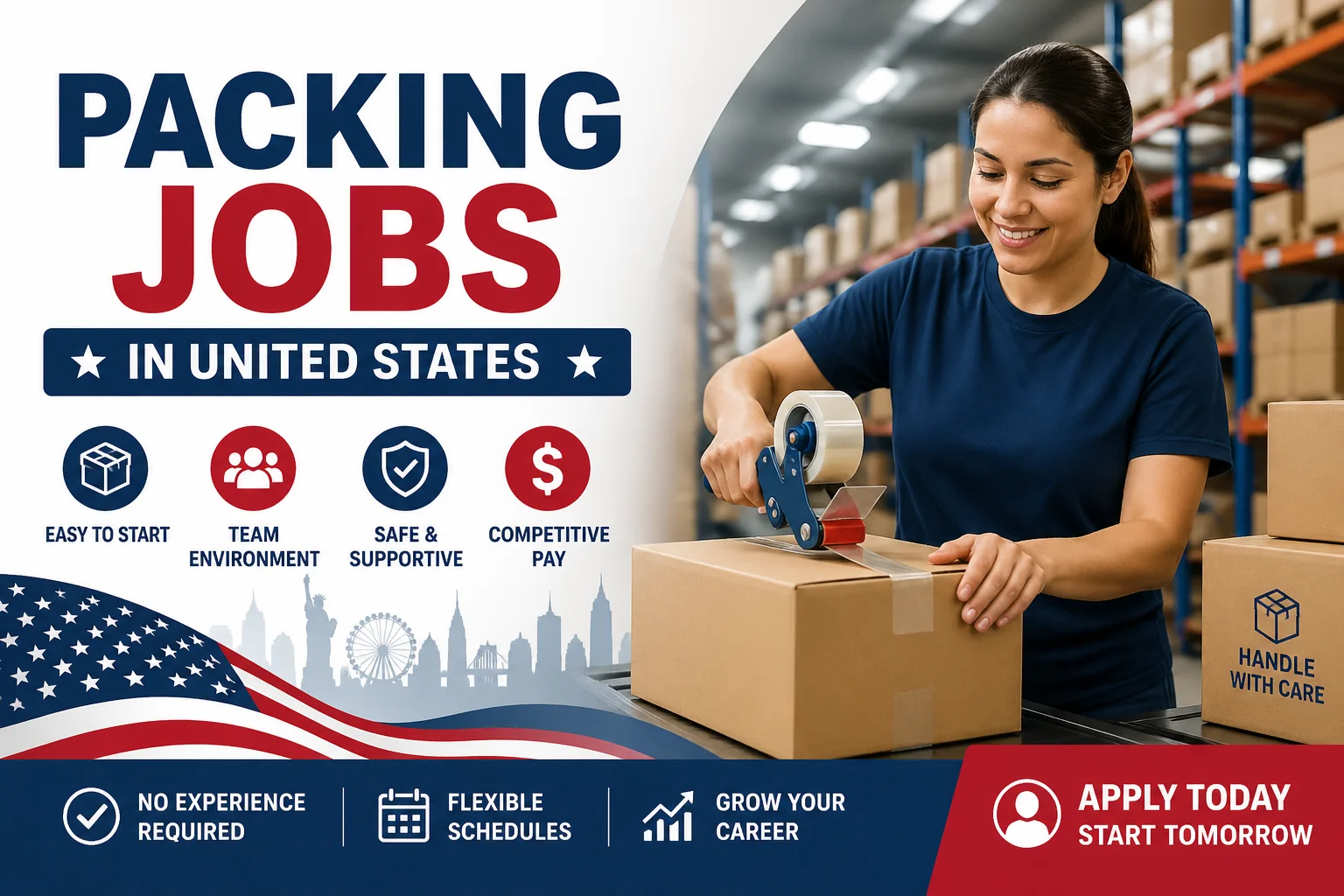
Packing Jobs in the United States: Opportunities and Insights
The demand for packing jobs in the United States has seen a significant rise in recent years, driven by the growth of e-commerce, manufacturing, and logistics industries. These roles are essential in ensuring that products are safely packaged and ready for distribution. Whether you're looking for entry-level work or a stable career path, packing jobs offer a variety of opportunities across the country. In this article, we’ll explore the types of packing jobs available, the skills required, potential employers, and tips for landing a position in this field.
What Are Packing Jobs?
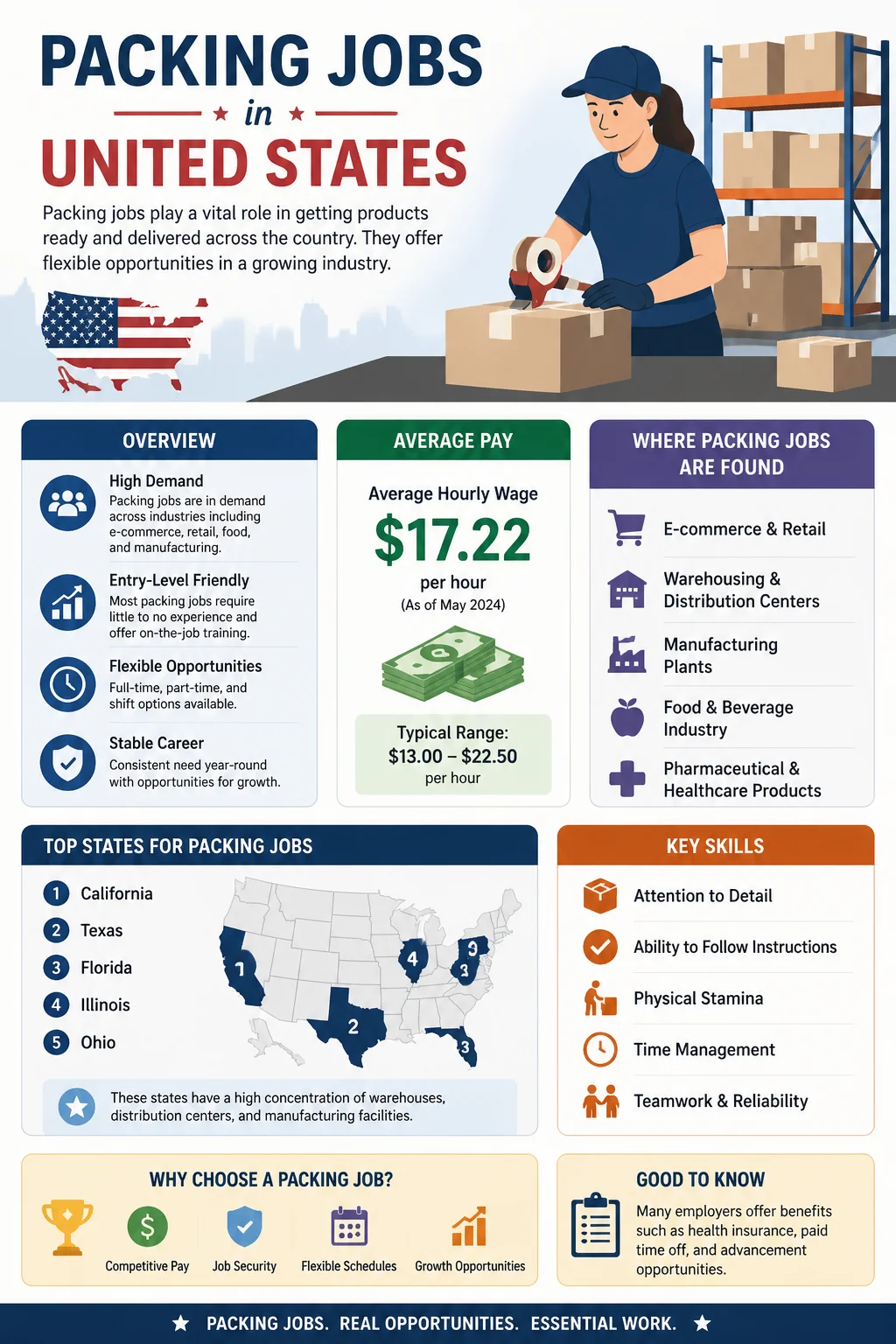
Packing jobs involve the preparation of goods for shipment or storage. Workers in these roles are responsible for assembling, wrapping, and labeling products, ensuring they meet quality and safety standards. These positions are often found in warehouses, factories, distribution centers, and retail environments. Packing jobs are typically entry-level, making them accessible to individuals with little to no prior experience.
Common tasks in packing jobs include:
- Inspecting products for defects or damage.
- Wrapping and securing items using protective materials.
- Labeling packages with accurate shipping information.
- Operating machinery or tools for sealing and packaging.
- Maintaining a clean and organized workspace.
Types of Packing Jobs in the United States
The packing industry offers a range of roles depending on the sector and level of expertise. Here are some common types of packing jobs available across the U.S.:
- Warehouse Packer: Works in large distribution centers, packing items for shipment to retail stores or directly to customers. Companies like Amazon and Walmart often hire for these roles.
- Manufacturing Packer: Focuses on packaging products as they come off production lines in factories. This can include food, electronics, or industrial goods.
- Retail Packer: Assists in packaging products for in-store purchases or online orders, often in supermarkets or department stores.
- Seasonal Packer: Temporary roles that spike during holiday seasons, particularly for e-commerce giants handling increased order volumes.
Skills and Requirements for Packing Jobs
While many packing jobs do not require formal education, certain skills and qualifications can help candidates stand out. Employers often look for the following:
- Attention to Detail: Ensuring products are packed correctly and meet quality standards.
- Physical Stamina: Many roles involve standing for long periods, lifting heavy items, and repetitive tasks.
- Time Management: Meeting deadlines and maintaining efficiency in fast-paced environments.
- Basic Math Skills: For counting inventory or measuring materials.
- Teamwork: Collaborating with colleagues to ensure smooth operations.
Most packing jobs provide on-the-job training, so prior experience is often not necessary. However, a high school diploma or equivalent may be required for some positions. Additionally, familiarity with warehouse equipment or safety protocols can be an advantage.
Top Employers and Locations for Packing Jobs
Packing jobs are available in nearly every state, with higher concentrations in areas with large logistics hubs or manufacturing centers. Some of the top employers include:
- Amazon: With fulfillment centers nationwide, Amazon frequently hires packers, especially during peak seasons.
- Walmart: Offers packing roles in distribution centers and retail stores.
- FedEx and UPS: Logistics companies with a constant need for packers to handle shipments.
- Target: Employs packers for both in-store and online order fulfillment.
States like California, Texas, Florida, and Illinois are known for high demand due to their large warehouse and distribution networks. Cities such as Los Angeles, Houston, and Chicago are hotspots for packing job opportunities.
Salary and Career Growth in Packing Jobs
The average hourly wage for packing jobs in the U.S. ranges from $12 to $18, depending on the employer, location, and experience level. Entry-level positions typically start at the lower end, while those with experience or specialized skills may earn more. Seasonal roles often offer overtime pay during busy periods.
For career growth, packers can advance to supervisory roles, such as team lead or warehouse manager, with additional training or experience. Some may also transition into related fields like inventory management or logistics coordination.
How to Find Packing Jobs in the United States
Landing a packing job is relatively straightforward due to the high demand. Here are some tips to get started:
- Search Online Job Boards: Websites like Indeed, Monster, and Glassdoor list thousands of packing job openings.
- Check Company Websites: Major employers like Amazon and Walmart often post openings directly on their career pages.
- Work with Staffing Agencies: Agencies can connect you with temporary or permanent packing roles in your area.
- Network Locally: Reach out to friends or family who work in warehouses or retail for potential referrals.
When applying, tailor your resume to highlight relevant skills like attention to detail and physical endurance. Be prepared for interviews by demonstrating reliability and a willingness to learn.
Challenges and Benefits of Packing Jobs
Like any job, packing roles come with their own set of challenges and rewards. On the downside, the work can be physically demanding and repetitive, with long hours during peak seasons. However, the benefits include job stability, opportunities for overtime, and the ability to enter the workforce quickly without advanced education.
Conclusion
Packing jobs in the United States provide a valuable entry point into the workforce for many individuals. With the continued growth of e-commerce and logistics, the demand for skilled packers is unlikely to slow down. Whether you’re seeking a temporary gig or a long-term career, this industry offers diverse opportunities to get started. Use the tips and resources mentioned to explore packing job openings in your area and take the first step toward a rewarding role.