


Electrician Jobs in the Philippines Feel Different These Days
Honestly, if you're thinking about jumping into electrician work here, there's more going on than just wiring houses. Demand keeps growing because of all the construction and factory setups popping up outside the big cities. From what I've seen, guys who know their stuff don't stay jobless for long.
Thing is, not every role is the same. Some stick to residential fixes in subdivisions around Manila. Others head out to industrial sites in Batangas or Cebu for bigger maintenance gigs. Pay varies a lot depending on which path you pick.
How Much Can You Actually Earn
Entry level usually starts around 15k to 20k a month. Once you get a couple years under your belt and maybe a few certifications, that jumps to 25k-35k pretty quick. Senior guys handling teams or specialized installs can pull 40k plus, especially if overtime is steady.
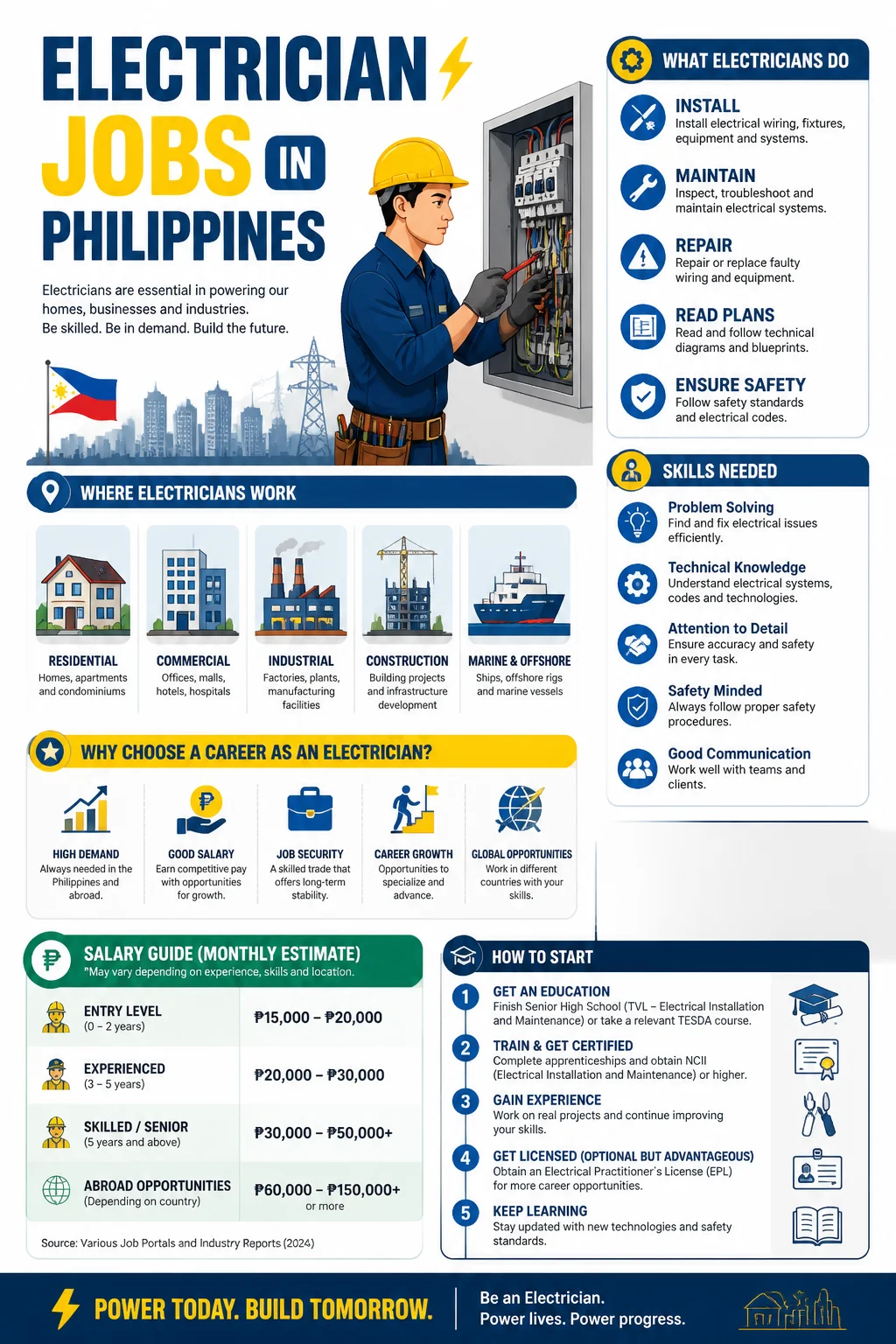
Benefits aren't always flashy but most decent companies throw in transportation allowance and sometimes meal stipends. Government projects tend to have better health coverage compared to small contractors.
Where People Are Actually Hiring
Online boards still work but word of mouth gets you further in this field. Check groups on Facebook that focus on skilled trades. Construction firms in Quezon City and Makati post openings regularly. Don't sleep on provincial postings either since new malls and plants keep needing electricians.
TESDA accredited centers often post job leads too. Some companies even partner with them for fresh graduates. If you have experience abroad, highlight that hard because it stands out.
What Employers Look For
Basic requirements stay the same: NC II certificate at minimum. But real talk, knowing how to read blueprints and handle troubleshooting on VFDs or solar setups gives you an edge right now. Safety training like first aid or basic firefighting doesn't hurt either.
Physical fitness matters more than people admit. You're climbing ladders and squeezing into tight spaces most days. Soft skills like explaining issues to clients in simple terms also help when you're doing house calls.
Daily Realities on the Job
Mornings start early, especially on site jobs. Expect to deal with heat and dust a lot. Tools get heavy after a while so investing in decent ones pays off fast. Some days you're just doing inspections, other times it's full rewiring that drags into the evening.
Team dynamics vary. Bigger outfits have clear roles while smaller shops might have you doing everything from inventory to client follow ups. Both have their pros.
- Residential work means more client interaction
- Industrial roles often come with shift schedules
- Maintenance contracts provide steadier income
Weather can throw plans off during rainy season. Always have backup indoor tasks ready.
Quick Tips Before Applying
Update your resume with specific projects instead of generic duties. Get references from past foremen. Practice basic interview questions about load calculations. And yeah, be ready to start at the bottom even with experience if you're switching companies.
Networking at trade events around the metro helps too. You never know when a casual chat leads to the next gig.