


Driver jobs in the Philippines keep popping up all over the place. Whether you're in Manila traffic or cruising provincial roads, opportunities are there if you got the right license and some patience.
Types of gigs that actually pay
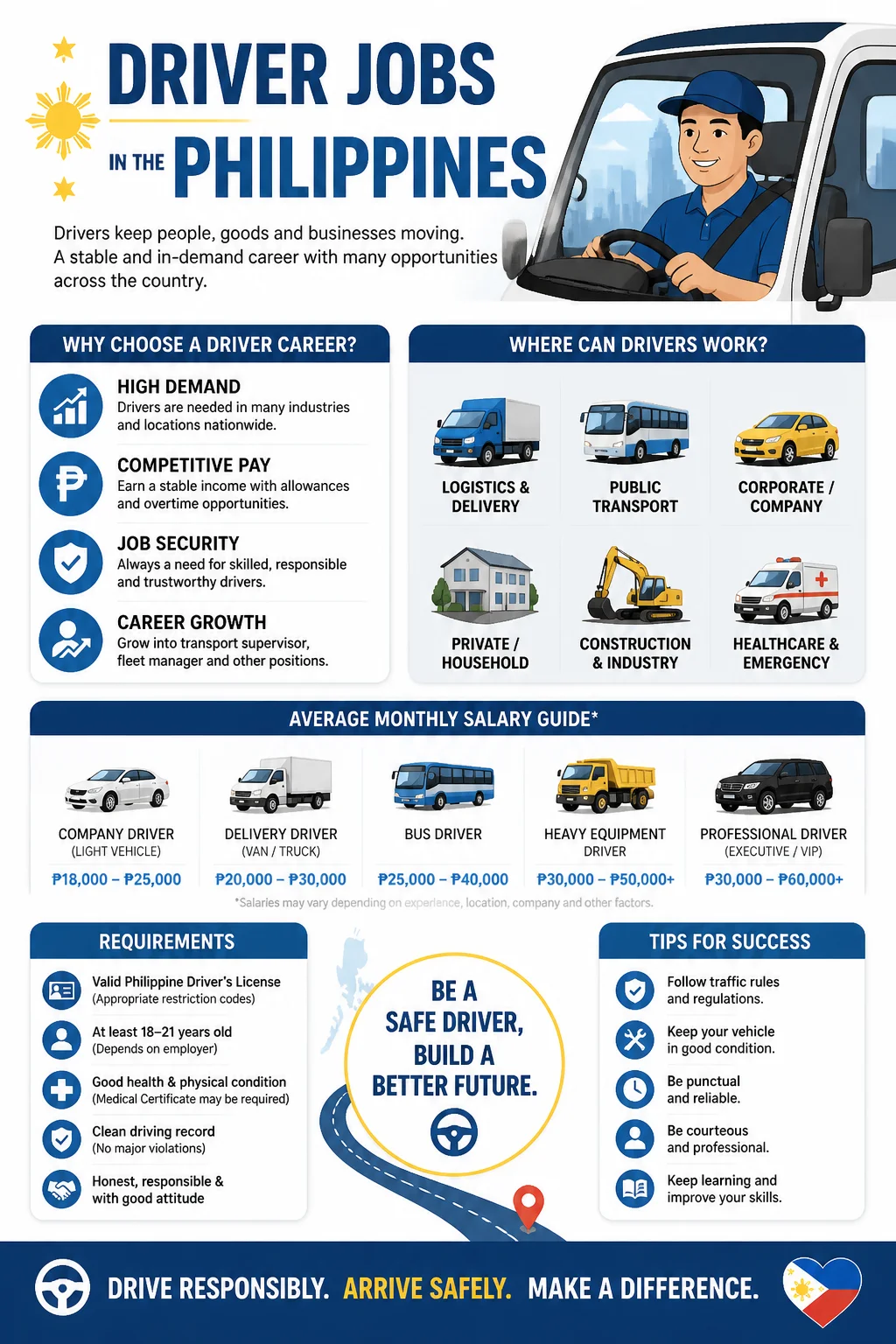
Private drivers for families or executives pull steady hours. Then there's ride-hailing with Grab or similar apps where you set your own time but deal with peak traffic madness. Truck driving for deliveries pays better yet means long hauls sometimes overnight.
Don't forget company shuttles or school bus routes. Those can feel more routine. And delivery vans for big stores or online shops – lots of new spots opened lately from what I've seen.
Requirements that matter most
You'll need at least a professional driver's license. Non-professional won't cut it for most paid roles. Some companies ask for clean records and a couple years behind the wheel. Defensive driving certs help too but aren't always mandatory.
Age limits usually sit around 21 to 45. Physical fitness checks pop up for longer shifts. Basic English or local language skills make interviews smoother.
How much can you really earn
Private driver pay starts around 15k to 25k monthly plus allowances. Ride-hailing folks average 20k to 35k depending on hours logged. Truck roles often hit 30k and up with overtime.
Benefits vary wild. Some include gas, meals or even housing for out-of-town work. Not great everywhere though so always ask straight up.
Where folks land these jobs
Online boards like JobStreet and Indeed list plenty daily. Facebook groups for drivers in specific cities work well too. Walk-in applications at transport hubs or big malls still happen.
Word of mouth from other drivers beats everything. Ask around your neighborhood or current spot if you're switching.
Training programs from TESDA can boost chances fast. They cover safety and handling big vehicles.
Real advice before jumping in
Traffic here tests nerves daily so build tolerance early. Gas prices fluctuate so factor that if you're on your own wheels. Night shifts pay extra but safety comes first always.
Start part time if possible to test waters. Many drivers move up to better routes once they prove reliable.